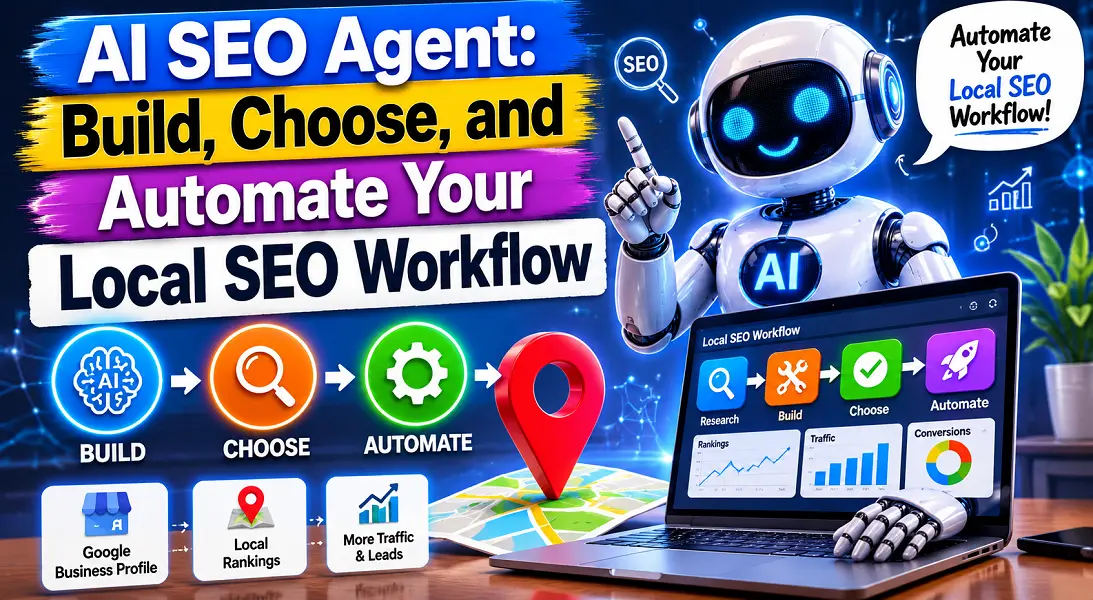

An AI SEO agent is autonomous software that plans, executes, and adapts multi-step SEO workflows—like keyword research, content optimization, technical auditing, and reporting—using live data, without needing constant human guidance. It goes beyond a chatbot because it can actually take direct action across connected tools. For content production specifically, GEOWriter is a content-focused SEO agent: it autonomously handles the full pipeline — live SERP analysis → content generation → E-E-A-T alignment → automated visuals → WordPress publishing — in about five minutes.
What Exactly Is an AI SEO Agent? (And How It’s Different)
An AI SEO agent is software that actually does the SEO work instead of just talking about it. Plug one into your live search data, and it’ll work through the whole task on its own—pulling what it needs, deciding what to do next, and coming back when it’s done.
SEO is a natural fit for AI agents because most of the work is sequential. Keyword research informs your content brief. Competitor gaps shape your outline. A technical audit tells you what to fix before you publish. Each step feeds the next, which is exactly what an agent is designed to handle.
Chatbot vs. Agent: The Action Gap
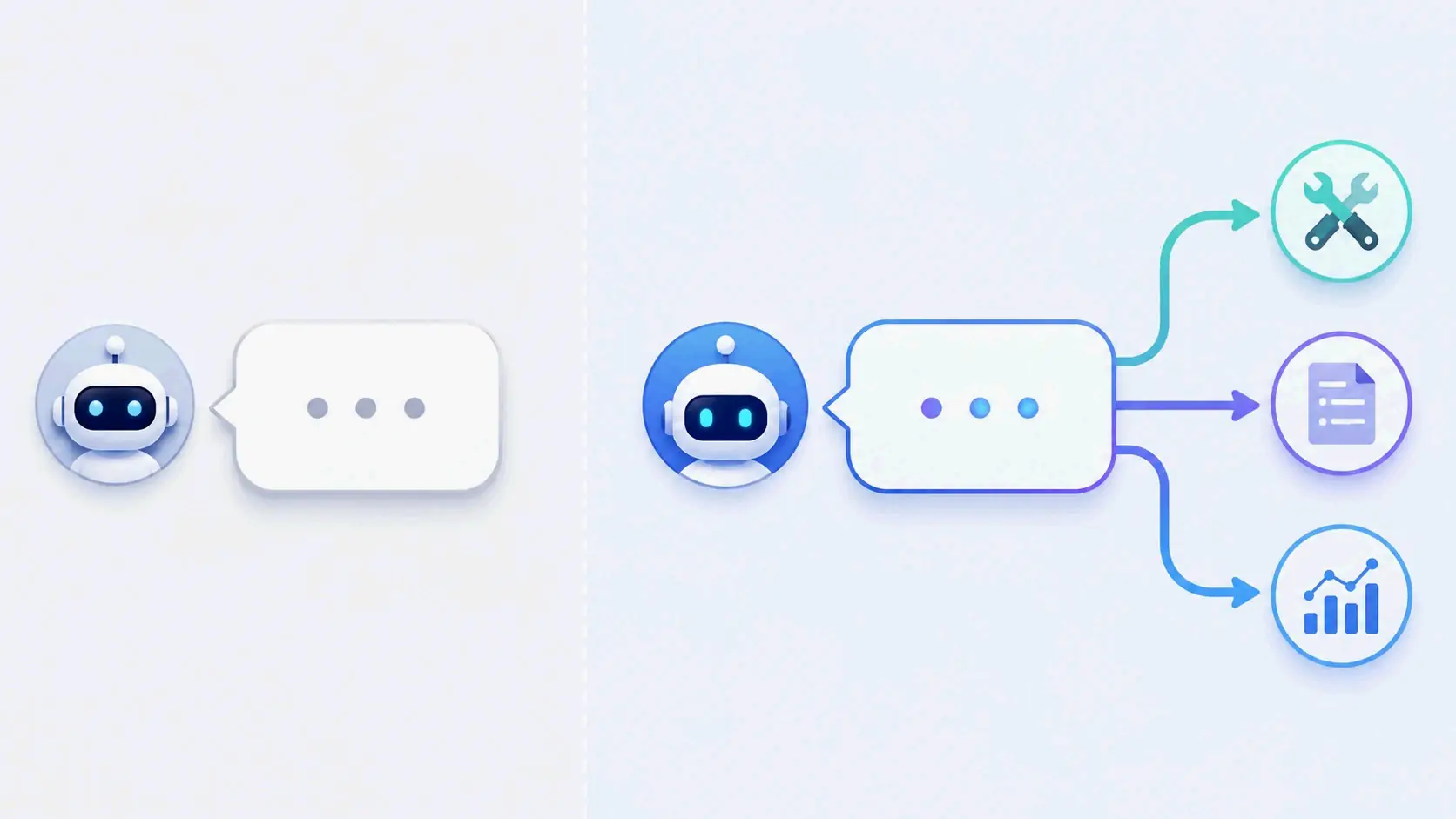
An AI SEO agent differs from a chatbot in one key way: the agent executes multi-step tasks autonomously across connected systems, while a chatbot returns text replies to single prompts. An agent can write a review reply, validate its tone against brand guidelines, post it to Google, log the action, and trigger a follow-up monitoring task. A chatbot generates the reply text but doesn’t connect to external tools, log actions, or chain follow-up tasks.
The Core Components of Any SEO Agent
Five core components make up an AI SEO agent: a perception layer, a reasoning engine, an action layer, a memory store, and a feedback loop. The perception layer pulls signals from live data sources. The reasoning engine evaluates those signals against your goals. The action layer pushes edits to connected platforms. The memory store retains prior decisions, brand voice, and approved templates. The feedback loop measures the result of every action and adjusts the next decision.
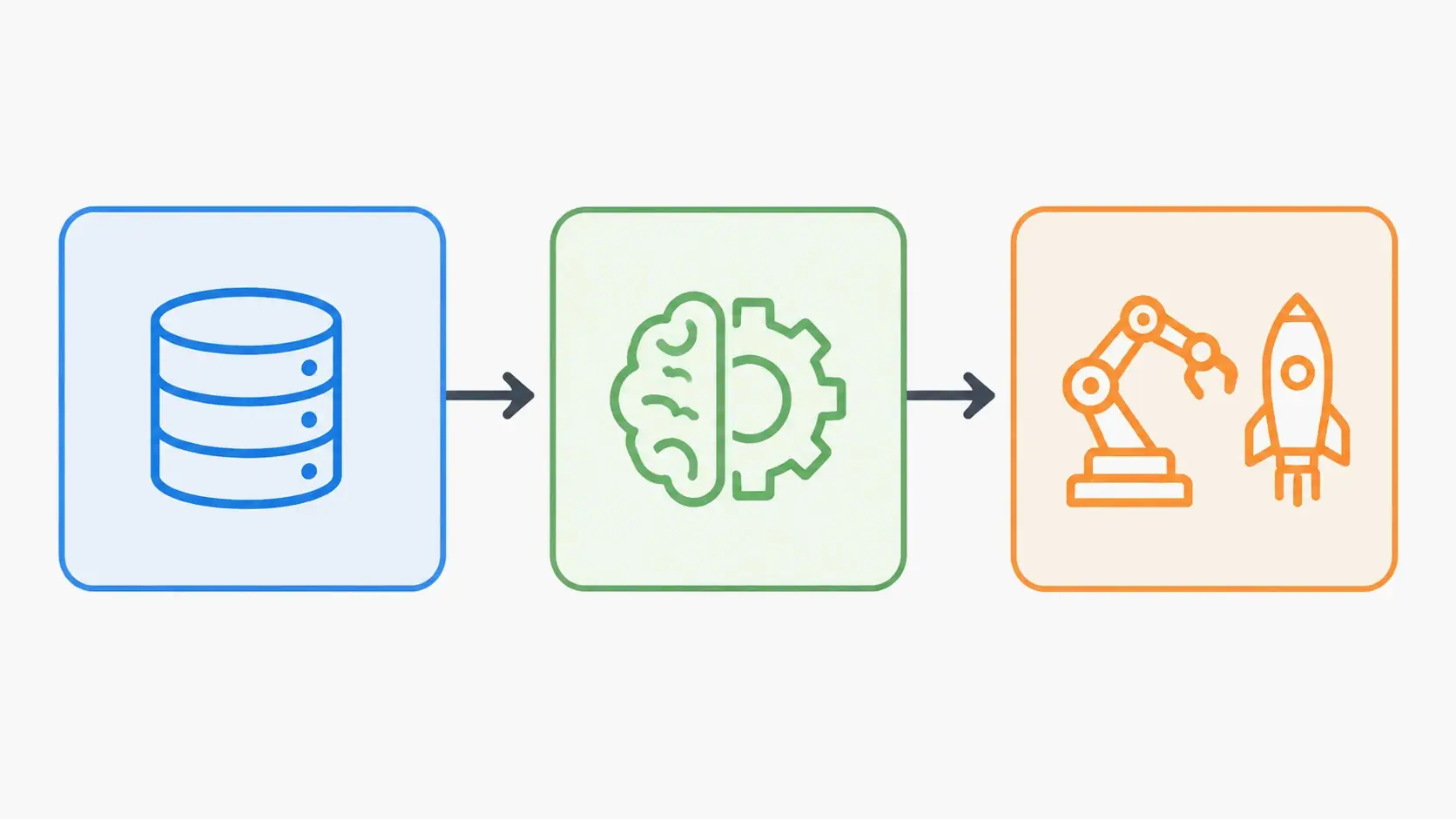
A real-world example comes from the Ahrefs team. As documented in Ahrefs’ blog, Dmytro spotted a broken image issue inside Ahrefs Site Audit and hit “Fix with Agent A.” He gave the agent temporary access to the site’s GitHub repo, and it opened a pull request with a code fix. After he merged it, the agent ran a fresh crawl to confirm the issue was resolved.
What an AI SEO Agent Can Automate (Real Use Cases)
SEO agents shine with work that’s high-volume, sequential, and data-dependent. Five categories cover most of what teams use them for.
Content Optimization Agents
Content optimization agents work in two directions: improving new content before it publishes, and surfacing opportunities in existing content after the fact. An agent running across your full content library can find pages with declining traffic, compare them against current top-ranking pages for their target keywords, and produce a prioritized refresh list with specific gaps to address. For the content generation leg of this workflow, GEOWriter — a content-focused AI SEO agent — combines live SERP analysis, E-E-A-T alignment, automated visuals, and one-click publishing into a single end-to-end pipeline, producing SEO-ready drafts in minutes.
The Ahrefs blog team built exactly this for their workflow. According to Ahrefs, in April 2026 the Ahrefs blog gained 13.4% in organic clicks, and the top traffic driver was a blog on content engineering. Automated content audits at this scale are one of the strongest ROI cases for SEO agents.
Technical Audit Agents
Technical SEO is full of repetitive pattern-matching work: crawl errors and broken internal links, missing H1s and duplicate page titles, slow load times and Core Web Vitals issues, schema markup gaps and structured data errors. Humans aren’t great at this at scale. An agent connected to a Site Audit tool can run a crawl, compare results against the previous run, spot new issues by severity, and post a digest of what actually needs attention this week.
Local SEO Agents
Local SEO agents automate Google Business Profile (GBP) audits, citation management, review monitoring, and local landing page generation. As Search Atlas explains, AI agents for local SEO combine large language models, structured data pipelines, and rules-based automation to monitor signals, decide on next actions, and apply changes inside connected platforms. They operate across multi-location brands by replicating decisions at scale and reconciling discrepancies between Google Business Profile, citation directories, and on-site landing pages.
The Three Ways to Build an SEO Agent (Choose Your Path)
The “AI SEO agent” label covers everything from a custom GPT you make on a Sunday afternoon to a system that can crawl your site, open a pull request, and verify its own fix. Three main platforms cover most of what teams actually use.
Path 1: Chatbot + MCP (DIY, Low-Cost)
This is the most accessible option for building your SEO AI agent, and probably the cheapest, since it layers onto tools you likely already pay for. Connect a chatbot you already use (ChatGPT, Claude, or Gemini) to live SEO data via an MCP (Model Context Protocol). Ahrefs’ MCP sits in both the official ChatGPT apps directory and the Claude connectors directory, so connecting it takes about a minute.
The agentic part kicks in when you give it a multi-step prompt—for example: “Find every post that’s lost more than 30% traffic this quarter, check which keywords each ranked for, and draft refresh briefs for the top five.” It’ll plan the steps, call the right connectors, and produce an output.
Path 2: Purpose-Built Platforms (Plug-and-Play)
Purpose-built AI agent platforms like Agent A combine switchable AI models (including Claude Opus 4.7, GPT-5.4 Mini, etc.), full SEO data access, and a pre-built app and skills library. Pre-built playbooks cover content gap analysis, keyword cannibalization detection, declining content detection, AI mention gap analysis, and more.
Whereas a chatbot has to be told what to do and how to do it, a purpose-built AI agent platform already knows the data structures and conventions before you ask. SEO agents created in these environments can also connect to tools like WordPress, Slack, GitHub, HubSpot, Notion, and Stripe, helping Stripe customers automate payment-related workflows.
Path 3: Third-Party Builders (Visual Automation)
Platforms like Gumloop and n8n offer drag-and-drop workflow editors. Instead of writing prompts or code, you connect nodes in a visual editor, drag and drop the steps you want, and wire up the logic without touching a terminal. The tradeoff is that these platforms connect to tools via the same MCPs you’d use yourself, so the data ceiling is identical to Path 1.
Quick Comparison Table
| Type | Best For | Why | Limitations |
|---|---|---|---|
| Chatbot + MCP | Building agents with tools you already pay for | Low marginal cost, flexible, plugs into existing chat interface | MCP exposes a subset of data; runs on your laptop unless hosted; no built-in SEO knowledge |
| Purpose-built agent | SEO-specific work where depth of data matters | Pre-built marketing skills, full product access, designed for SEO | Locked to one provider’s data and worldview |
| Third-party builder | Visual, no-code workflow building | Drag-and-drop interface, broad integrations | Connectors are usually MCPs underneath; SEO-agnostic |
How to Build Your First SEO Agent: A Step-by-Step Guide for Non-Developers
Building a useful SEO agent is less technical than you might think. It’s actually more about process.
Step 1: Choose Your LLM Engine
Start with Claude (using Claude Code or the Claude app with agent mode) or ChatGPT (using its dedicated agent mode for longer, autonomous workflows). Both support MCP connections and can chain multi-step prompts.
Step 2: Set Up Your MCP Connections
Connect your LLM to live SEO data via MCP servers. Essential connections include:
- Ahrefs MCP: For keywords, backlinks, SERPs, and site audits
- Google Search Console MCP: For performance data and crawl insights
- GBP MCP: For Google Business Profile data and updates
As Ahrefs notes, “Point it at authoritative sources like Ahrefs, Search Console, or Bing Webmaster Tools MCP directly instead” of relying on the agent’s internal knowledge. APIs and MCP connections beat scraping because the data comes back structured and verifiable.
Step 3: Write Your First Skill File
Anthropic’s Complete Guide to Building Skills for Claude recommends structuring agent instructions as separate skill files rather than a single long prompt. One file per job. Each file is short, specific, and independently maintainable. The keyword research skill gets updated without touching the blog draft skill.
To create a skill file, use the skill-creator tool from Anthropic. Tell Claude what you want your skill to do—say, generate a content brief. The skill-creator will walk you through the whole process: interviewing you to understand the requirements, drafting the SKILL.md, evaluating the output, and iterating until you are happy.
Step 4: Add a Memory File for Consistency
After any significant SEO build, ask the agent what it learned and save the lessons to a memory.md file. For SEO agents, the lessons compound: which keyword difficulty thresholds actually correlate with rankings for your site, which content formats perform best in your niche, which technical issues your CMS keeps reintroducing. Future projects will start from that baseline rather than from scratch.
Glen Allsopp, Head of Marketing Strategy and Research at Ahrefs, has the agent create and update an Overview.md file for this very reason. As he notes in Ahrefs’ blog, “AI makes it really easy to build, but also just as easy to break things. Have some system: local backups, GitHub, whatever you’ll actually use.”
Step 5: Run Your First Task with Approval Gates
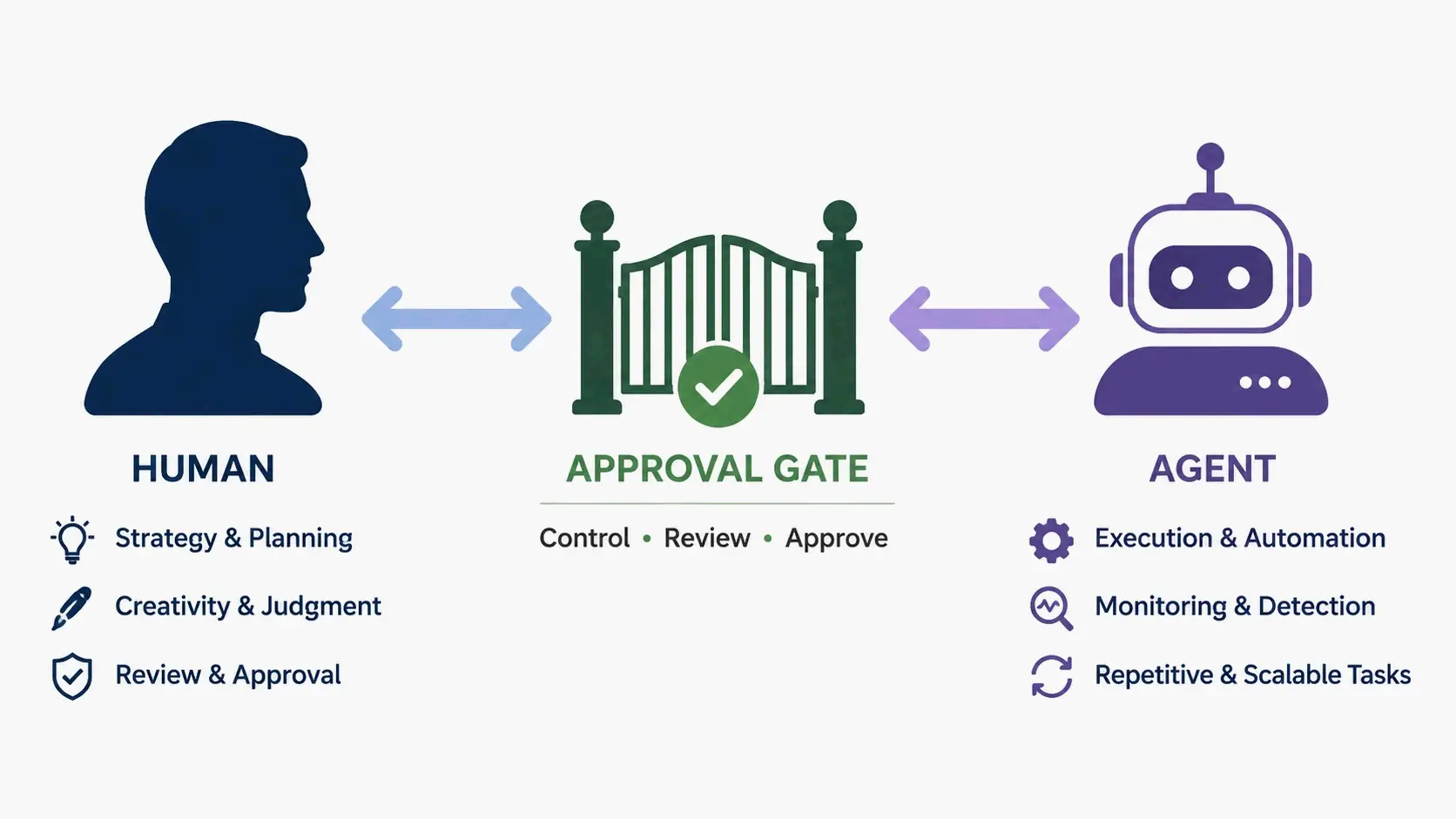
Start with a single, low-risk task—for example, “Find 3 broken links across the site and suggest fixes.” Set up approval gates for any write or delete actions. Most good agents have human approval steps built in. The approval queue routes proposed actions to a human inbox with the agent’s recommended action, supporting evidence, and one-click approve or reject buttons.
Applied: Building a Local SEO Agent for Small Businesses
Local SEO is a perfect agent use case because the work is repetitive, multi-step, and data-heavy. Every location has identical update needs (hours, holidays, posts, reviews), and an agent applies the same logic across all locations in seconds. For the content generation piece—local landing pages, GBP posts, and service-area articles—GEOWriter acts as a content-focused AI SEO agent, feeding E-E-A-T-aligned drafts directly into the pipeline to eliminate the trade-off between content quality and production speed.
The Local SEO Workflow You Can Automate Today
A complete local SEO agent workflow includes:
- Pull GBP insights: Audit every connected GBP for missing fields, policy violations, and inconsistencies
- Audit citations: Check NAP (Name, Address, Phone) consistency across 500+ citation networks
- Generate weekly local content: Draft GBP posts, local landing pages, and FAQ content
- Monitor reviews: Track sentiment, draft replies, and escalate negative reviews
- Track local pack rankings: Check positions for target keywords per location
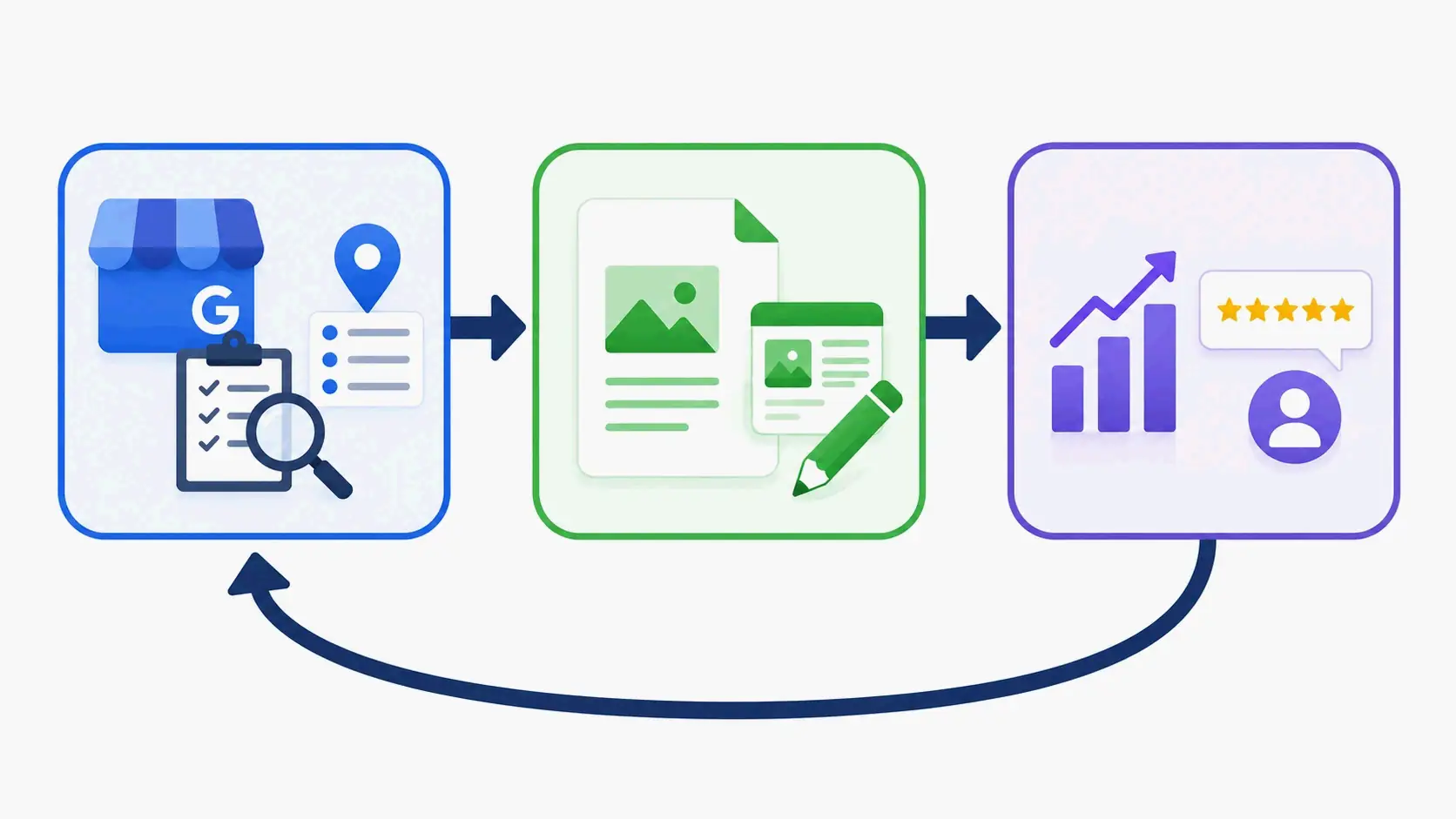
As Search Atlas explains, “AI agents for local SEO are autonomous software systems that execute local search optimization tasks across Google Business Profile, citations, reviews, schema, rankings, and AI search visibility.”
Sample Skill File: Local SEO Agent
Below is a simplified skill file structure you can adapt:
# SKILL.md
## Name: Local SEO Audit Agent
## Purpose: Audit a single Google Business Profile for optimization opportunities
## Input: GBP URL or location ID
## Steps:
1. Pull current GBP fields (name, category, hours, phone, website, attributes)
2. Compare against best practices for the industry
3. Check for missing fields, policy violations, and consistency issues
4. Generate prioritized fix list with specific recommendations
5. Route high-impact fixes to human approval queue
Case Study: A Restaurant That Did It
Chowly, an AI platform for restaurants, offers an SEO Agent that works continuously. According to Chowly, the agent watches four data sources (Google SERP, Map Pack, AI Overviews, ChatGPT) continuously, synthesizes them into a decision, and ships the work—without waiting for human input.
One documented result: a restaurant called Two Eggs! in suburban Atlanta, GA, achieved a 53% increase in first-party sales and saved $64,351 in commissions over four months. As founder Richard Penny noted: “You don’t even need to show me how well it’s going, I already know you guys have more than doubled my direct 1st party sales.”
Should You Use an SEO Agent? (Cost-Benefit for Solopreneurs vs Agencies)
Solopreneur Path: Low-Cost, Single-Use Agents
For solopreneurs, the chatbot + MCP path is ideal. It layers onto tools you likely already pay for, with low marginal cost. Start with one or two workflows—content freshness audit, competitor keyword gap analysis—rather than trying to automate everything at once.
Agency Path: Scalable, Multi-Client Agents
For agencies, purpose-built platforms like Agent A or SEO.ai are better suited. They offer pre-built marketing skills, client management features, and higher autonomy levels. The Fortis Agency case demonstrates the potential: they helped a B2B SaaS client grow from under 1,000 monthly organic visitors to 40,000, signing $100,000 in new Lifetime Value every month from SEO content.
The Hybrid Human-Agent Model
The most effective approach combines automated agents with human oversight. Agents handle execution (data analysis, monitoring, repetitive tasks) while humans handle strategy, creative direction, and final approval. Agents win on cross-system orchestration, automated tools win on bulk repeat tasks, and humans win on strategic judgment.
GEO for Local: Getting Your AI SEO Agent to Cite You in ChatGPT
AI search visibility matters because ChatGPT, AI Overviews, and Perplexity are becoming primary search entry points. AI agents can help monitor and improve local AI citations.
What Is an AI Mention Gap?
An AI mention gap is the difference between the prompts where your competitors appear in AI outputs (ChatGPT, AI Overviews, Perplexity) and the prompts where you appear but your competitors don’t. As explained in Ahrefs’ blog, the agent “finds the prompts where competitors get named, and you don’t, sorts them by prompt volume and how often each competitor appears, and gives you a concrete list of gaps to close.”
Prompt Template: Find Your Local GEO Gap
Use this prompt with your AI SEO agent:
Find the top 3 prompts in [your city] where my competitors are cited in ChatGPT and AI Overviews, but I am not. For each prompt, identify which competitor is cited, what they’re cited for, and what content or schema change would close the gap.
How to Act on Agent-Driven GEO Insights
Once your agent identifies AI mention gaps, take these actions:
- Update LocalBusiness schema on relevant pages
- Publish authoritative content targeting the specific prompt topics
- Fix any entity disambiguation issues in your Knowledge Graph
- Request Knowledge Graph edits if brand information is outdated
Best Practices for Building SEO Agents (Expert Tips)
Safety First: Approval Gates and Backups
Always use memory files for long-term context. Set approval gates for write/delete actions. Use local backups or GitHub for version control. As Glen Allsopp advises in Ahrefs’ blog: “AI makes it really easy to build, but also just as easy to break things. Have some system: local backups, GitHub, whatever you’ll actually use.”
Scaling Up: From One Task to Full Workflow
The single most expensive mistake when building SEO agents is trying to automate everything at once. Pick one SEO workflow—your competitor research process, your monthly organic performance report, your internal linking template—automate that first, get it working, then build the next piece.
Constance Tan, Product Marketer at Ahrefs, learned this lesson early on. As she shared in Ahrefs’ blog: “I once spent a whole week using AI to plan, build, and debug an application. It took forever. And it still needed improvement.” Her advice: pick one workflow, automate that first, get it working, then build the next piece.
Conclusion
An AI SEO agent is not a magic wand—it’s a powerful assistant that automates repetitive, multi-step SEO tasks. For the content creation leg, GEOWriter — a content-focused AI SEO agent — handles SERP analysis, content generation, E-E-A-T alignment, automated visuals, and WordPress publishing in a single five-minute workflow, slotting directly into your agent pipeline while the agent manages research, audits, and monitoring.
Start today: pick one task (e.g., content freshness audit), choose your path (chatbot + MCP for low cost, purpose-built for speed), and run your first agent workflow. Add approval gates, monitor weekly, and expand from there.