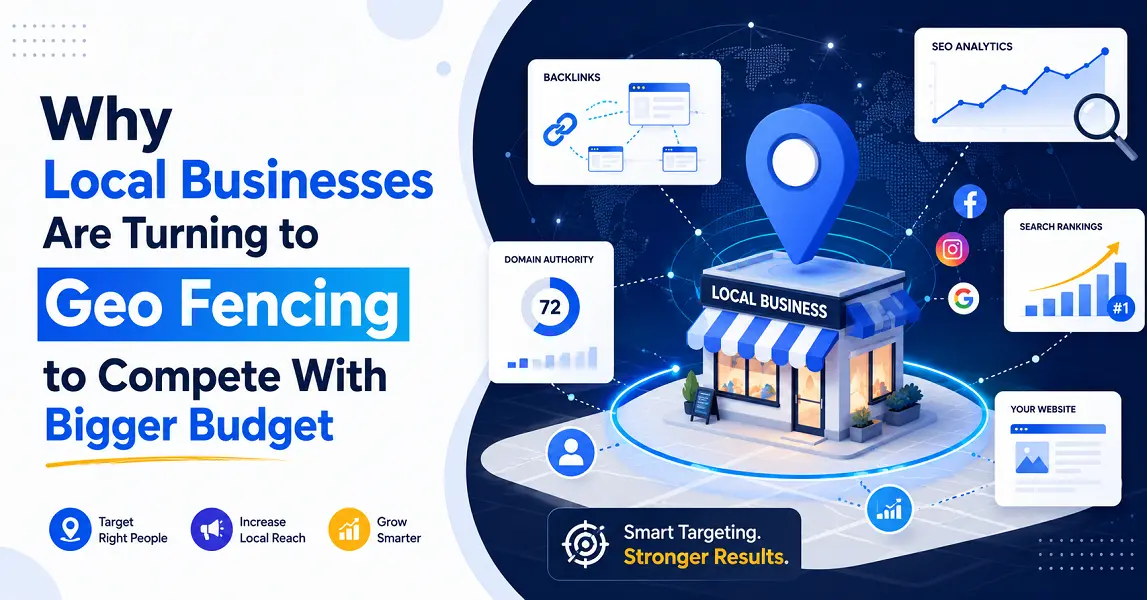
Small and mid-sized businesses have always faced the same problem in marketing: the biggest advertising budgets tend to win the biggest audiences. A national chain can outspend a local shop on billboards, radio, or broadcast TV without much effort. For years, that gap was hard to close. Geo-Fencing is changing that math.
What Geo Fencing Actually Does
At its core, Geo Fencing (also written as geo-fencing or geofencing) uses real-world location data to build a virtual boundary around a specific place, a competitor’s storefront, a trade show, a neighborhood, or a business district. When someone with a mobile device enters that boundary, they can be added to an advertising audience and served digital ads afterward, often across multiple devices and platforms.
The distinction that matters most: traditional advertising reaches people based on where an ad is placed. Geo Fencing reaches people based on where they’ve actually been.
That shift, from placement to behavior, is why Geo Fencing has become one of the more accessible ways for smaller businesses to compete with larger ones. Instead of paying to reach a broad audience and hoping some percentage is relevant, a local business can build a much smaller, much more relevant audience made up of people who’ve already shown some kind of real-world interest.
Common, Practical Use Cases
Geo Fencing works especially well for a handful of everyday small-business scenarios:
- Competitor conquesting targeting people who visit a competing business, then following up with ads afterward.
- Event and trade show targeting reaching attendees of an industry event, often for weeks after the event ends.
- Service-area marketing focusing ad spend on the zip codes or neighborhoods most likely to convert, rather than an entire metro area.
- Foot-traffic and retail campaigns reaching people near a physical location or a related type of business.
None of these require a national ad budget. They require knowing which physical locations matter to your business and building the targeting around them.
Why Measurement Is the Bigger Story
The real advantage of geo fencing isn’t just precision targeting it’s what happens after the ad runs, and how long that reach actually lasts. Unlike a billboard or a radio spot, geo fencing campaigns typically come with digital performance data: ads served, clicks, and completion rates that show whether a campaign is actually working, not just whether it ran. Many providers also continue serving ads to a captured audience well after the initial location visit — some offer extended delivery windows of up to 30 days, so a single trade show or competitor visit can keep generating impressions long after someone’s left the area.
That’s a meaningful shift for small business owners who’ve historically had to guess at ROI on traditional media. Being able to see, in near real time, whether a specific location or audience segment is producing engagement means the budget can move toward what’s working instead of being locked in for the length of a media buy.
Agencies working in this space West Coast Media, for example, offers both standard Geo-Fencing and a more targeted addressable version that draws on thousands of data points to narrow in on specific households or business locations have built this kind of reporting directly into their client dashboards, which has made the technology considerably more approachable for businesses that don’t have an in-house analytics team.
Getting Started Without Overcomplicating It
Businesses considering geo fencing for the first time don’t need to build an elaborate strategy on day one. A good starting point is usually the simplest use case: pick one location that matters — a competitor, an event, a busy commercial corridor and build a single, focused campaign around it before expanding.
The technology that was, for a long time, mostly available to large enterprise advertisers is now priced and packaged for much smaller budgets. For local businesses trying to compete on relevance rather than reach, that’s a meaningful opening.
Frequently Asked Questions About Geo Fencing
What’s the difference between Geo Fencing and geotargeting?
Geotargeting delivers content or ads to people based on a broad location, like a city, state, or zip code, regardless of what they’re actually doing. Geo-Fencing is more precise: it responds to real-time movement, triggering an action specifically when someone enters or exits a defined boundary, such as a store, event venue, or competitor’s location.
How long do Geo-Fencing ads keep showing after someone leaves the area?
That depends on the provider, but many campaigns are set up to continue delivering ads for a defined window after the initial location visit, commonly up to 30 days. That extended window matters because most people don’t take action the first time they see an ad. A single trade show visit or competitor stop-by can keep generating impressions well after the moment itself has passed.
Is Geo-Fencing only useful for large companies?
Not anymore. Geo-Fencing technology used to require the kind of budget only large, national advertisers could justify. That’s changed. Local and regional businesses, from single-location retailers to multi-location service providers, now have access to the same targeting technology at a scale and price point that fits smaller marketing budgets.
What’s the difference between standard and addressable Geo-Fencing?
Standard Geo-Fencing targets anyone who physically enters a defined location, without knowing exactly who they are. Addressable geo-fencing goes a step further, using curated household and business data to target specific addresses directly, which is useful for businesses that already know which households or companies represent their best prospects.
West Coast Media offers Geo Fencing services, including standard and addressable targeting options, for local and regional businesses.