
Introduction
Digital marketing has become one of the most important skills in today’s technology-driven economy. As businesses continue to shift their focus toward online audiences, the demand for professionals who understand digital advertising, content creation, social media management, and search engine optimization continues to grow. Because of this, educational institutions are adapting their curricula to prepare younger generations for careers in a digital-first world.
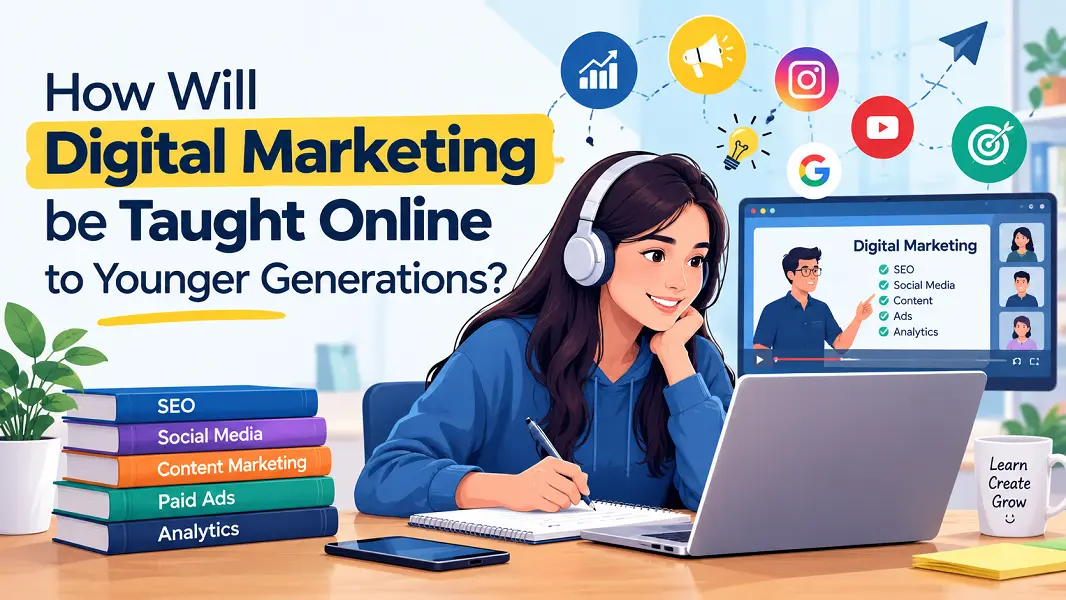
Online learning environments are expected to play a significant role in how digital marketing is taught in the coming years. Younger students are already comfortable with technology, mobile devices, and social media platforms, making online education a natural fit for learning marketing concepts. However, future digital marketing education will involve far more than watching recorded lectures. It will focus on hands-on experiences, real-world applications, and interactive learning tools designed to mirror the constantly evolving digital landscape.
Interactive Learning Will Become the Standard
One of the most significant changes in digital marketing education will be the increased use of interactive learning experiences. Traditional lectures will still provide foundational knowledge, but students will spend more time participating in simulations, group projects, and digital campaigns.
Rather than simply reading about search engine optimization or email marketing, students may be tasked with creating their own campaigns using educational versions of professional marketing platforms. These exercises can help learners understand how strategies perform in real-time and how small changes can affect results.
Interactive quizzes, virtual workshops, and live discussions will also encourage engagement. Because digital marketing is a field that evolves rapidly, students benefit when they can actively participate in learning rather than passively absorb information. This approach allows them to develop problem-solving skills alongside technical knowledge.
Real-World Projects Will Drive Skill Development
Future online digital marketing courses are likely to place greater emphasis on practical experience. Employers increasingly value candidates who can demonstrate their abilities through actual projects instead of relying solely on academic credentials.
Students may manage mock social media accounts, create content calendars, develop advertising campaigns, and analyze website performance using industry-standard tools. Instructors can provide realistic case studies based on current business challenges, allowing students to practice strategic thinking.
These hands-on projects offer several advantages. They help learners build portfolios, gain confidence, and understand how different marketing channels work together. By the time students complete their training, they may already have examples of campaigns and marketing plans that showcase their capabilities to future employers.
Artificial Intelligence Will Become a Core Subject
Artificial intelligence is transforming the digital marketing industry, making it an essential topic for younger generations. Future online courses will likely teach students how AI tools can support content creation, audience analysis, customer service, and campaign optimization.
Instead of viewing AI as a replacement for marketers, educational programs will focus on teaching students how to use these tools responsibly and effectively. Learners will need to understand both the opportunities and limitations associated with automation.
Assignments may include analyzing AI-generated content, evaluating data-driven recommendations, and developing strategies that balance automation with human creativity. Understanding how AI integrates with marketing workflows will become a competitive advantage as businesses increasingly adopt advanced technologies.
Students who receive this type of training will be better prepared to enter a workforce where AI-assisted decision-making is becoming the norm.
Online Classrooms Will Use Advanced Educational Technology
Technology used within virtual classrooms will continue to improve the learning experience for both students and instructors. Modern educational platforms already offer features that support collaboration, communication, and assessment, but future systems are expected to become even more sophisticated.
For example, educators may use classroom monitoring software to help track participation, identify students who need additional support, and ensure that learning objectives are being met. Combined with analytics and personalized learning tools, these technologies can create a more customized educational experience.
Students may receive individualized recommendations based on their progress, strengths, and areas that require improvement. This level of personalization can increase engagement and help learners master complex digital marketing concepts more efficiently.
Additionally, virtual reality and augmented reality technologies may eventually create immersive learning environments where students can interact with digital campaigns and consumer behavior simulations in entirely new ways.
Collaboration and Creativity Will Remain Essential
Although technology will play a larger role in education, collaboration and creativity will remain central to effective digital marketing instruction. Marketing ultimately involves connecting with people, understanding audiences, and delivering meaningful messages.
Future online courses will likely encourage teamwork through virtual collaboration platforms where students can brainstorm ideas, share feedback, and work together on marketing projects. These experiences help replicate the collaborative environments found in professional marketing departments.
Creative thinking will also remain highly valued. While analytics and automation provide important insights, successful campaigns often depend on originality and emotional connection. Educators will continue teaching students how to develop compelling content, tell effective stories, and build authentic relationships with audiences.
By combining technical knowledge with creative problem-solving, students can develop the well-rounded skill sets that businesses increasingly seek.
Conclusion
The future of online digital marketing education is likely to be more interactive, personalized, and practical than ever before. Younger generations will learn through real-world projects, collaborative experiences, and technology-driven instruction that reflects the realities of modern marketing. As digital tools continue to evolve, educational programs will adapt to ensure students gain relevant and valuable skills.
Ultimately, successful digital marketing education will focus not only on teaching platforms and techniques but also on developing critical thinking, creativity, and adaptability. These qualities will help future marketers navigate a constantly changing digital environment and build successful careers in an increasingly connected world.