
Introduction
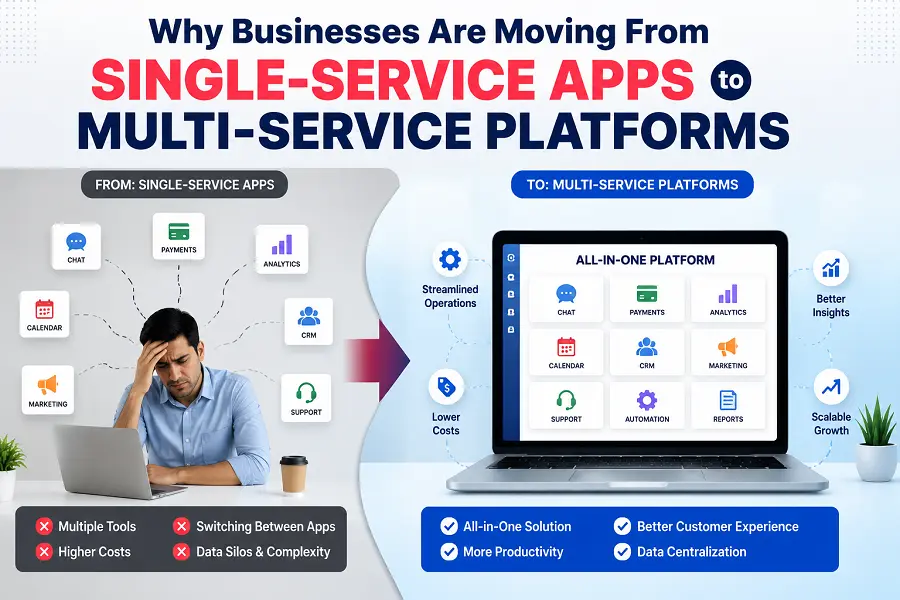
The mobile app landscape has changed dramatically over the past decade. Businesses once focused on creating applications that solved a single problem or delivered one specific service. While this approach worked well in the early stages of app development, consumer expectations have evolved significantly. Modern users prefer convenience, efficiency, and the ability to access multiple services from a single platform rather than downloading and managing numerous separate applications.
This shift has fueled the rise of multi-service platforms, which combine various services into a unified user experience. From transportation and food delivery to e-commerce and home services, businesses are increasingly recognizing the value of offering several solutions through one digital ecosystem. As competition intensifies and customer retention becomes more challenging, multi-service platforms are emerging as a strategic way to improve user engagement and drive long-term growth.
The Demand for Convenience Is Driving Change
Consumer behavior has become one of the primary factors behind the movement toward multi-service platforms. People want fast and seamless access to products and services without switching between multiple apps throughout the day.
Consider how many different applications an average consumer might use to order food, schedule transportation, shop online, hire a service professional, or make payments. Constantly moving between platforms can create friction and reduce user satisfaction. Multi-service platforms eliminate much of this inconvenience by consolidating several services under one account and interface.
Businesses are responding by expanding their offerings to create comprehensive digital experiences. Rather than serving a single need, companies can position themselves as everyday solutions that become an integral part of users’ routines. The result is stronger customer engagement and increased platform loyalty.
As convenience continues to influence purchasing decisions, businesses that simplify the customer journey gain a significant competitive advantage.
Greater Revenue Opportunities Through Service Expansion
One of the biggest advantages of a multi-service platform is the ability to generate revenue from multiple sources. Single-service apps are often dependent on one business model, making them vulnerable to market fluctuations and changes in customer demand.
By offering multiple services within a single ecosystem, businesses can diversify their income streams. A platform that begins with transportation services may later expand into food delivery, grocery shopping, courier services, and e-commerce. This diversification can create additional customer touchpoints and increase overall transaction volume.
Many organizations are also integrating retail opportunities through an online functioning company store, allowing customers to purchase branded merchandise, specialty products, or business-related offerings directly from the platform. These additional services not only create new revenue channels but also strengthen brand awareness and customer relationships.
The ability to cross-sell services to existing users often makes multi-service platforms more profitable than single-purpose applications.
Technology Has Made Multi-Service Platforms More Accessible
In the past, building a comprehensive multi-service platform required substantial resources, extended development timelines, and significant technical expertise. Today, advances in software development frameworks and scalable cloud technologies have made these projects far more achievable.
Businesses can now work with an on-demand app development company to create customized platforms that combine multiple services while maintaining a consistent user experience. Modern development tools make it easier to integrate payment systems, customer management features, communication tools, analytics, and service modules into one centralized platform.
This increased accessibility has encouraged startups and established businesses alike to explore multi-service strategies. Organizations no longer need the resources of a major technology company to launch sophisticated digital ecosystems capable of serving diverse customer needs.
As development costs become more manageable, the trend toward multifunctional platforms is expected to continue accelerating across various industries.
Proven Business Models Are Encouraging Adoption
The success of large multi-service platforms around the world has demonstrated the potential of this business model. Companies operating super-app ecosystems have shown that users are willing to embrace platforms that offer a variety of integrated services.
As a result, many entrepreneurs seek solutions that allow them to replicate similar functionality while adapting it to their own markets. Products such as a White Label Gojek Clone provide businesses with a foundation that can be customized to support multiple services, including transportation, delivery, home maintenance, and other on-demand offerings.
Likewise, a Gojek Clone Solution can provide entrepreneurs with a framework for launching comprehensive platforms without having to develop every feature from scratch. These solutions help reduce development time and allow businesses to focus more attention on customer acquisition, operational efficiency, and market expansion.
The availability of proven technology models has lowered barriers to entry and accelerated the adoption of multi-service business strategies across numerous industries.
Stronger Customer Retention and Brand Loyalty
Acquiring customers is often one of the most expensive aspects of running a digital business. Multi-service platforms help maximize customer lifetime value by encouraging users to engage with multiple offerings rather than relying on a single service.
When customers use one platform for transportation, delivery, shopping, and other daily needs, they become more deeply integrated into the platform’s ecosystem. This increased engagement often improves retention rates because users have less incentive to seek alternatives.
Additionally, unified loyalty programs, rewards systems, and personalized experiences can further strengthen customer relationships. Businesses gain access to broader customer data, enabling them to better understand preferences and recommend relevant services.
Over time, this creates a powerful cycle where greater convenience leads to more engagement, increased usage generates more data, and improved personalization drives even stronger loyalty.
Conclusion
The shift from single-service apps to multi-service platforms reflects changing consumer expectations and evolving business priorities. Customers increasingly prefer convenient, all-in-one digital experiences that simplify their daily lives, while businesses benefit from diversified revenue streams, stronger customer retention, and expanded growth opportunities.
Advances in technology, accessible development solutions, and proven marketplace models have made it easier than ever for companies to embrace this approach. As competition continues to grow across digital industries, multi-service platforms are likely to play an increasingly important role in helping businesses remain relevant, scalable, and customer-focused. Organizations that successfully create seamless, integrated experiences will be well-positioned to thrive in the modern digital economy.