A lot of businesses publish content regularly and still can’t explain how it connects to actual revenue. That disconnect usually traces back to one missing piece.
A strategic content plan is what ties content directly to business goals, instead of treating publishing as an activity that happens for its own sake. Without one, even consistent content often ends up scattered, answering random questions instead of the ones that actually move the business forward.
This is exactly where strategic content services tend to make the clearest difference, especially for businesses that have plenty of content but can’t point to what it’s actually accomplishing.
Let’s look at what turns scattered content into something that actually works.
Why Content Without Strategy Underperforms
Here’s the thing: content created without a plan usually reflects whatever feels urgent that week, not what the business actually needs.
The result is a mix of topics with no clear thread. Some pieces target the wrong audience. Others duplicate existing content. A few chase trends that have nothing to do with what the business sells.
- Content without clear goals is hard to measure or improve over time.
- Random topic selection often misses the questions buyers actually ask.
- Teams waste effort producing content that doesn’t support the sales process.
Honestly, this isn’t usually a creativity problem. It’s a direction problem.
Starting With Business Goals, Not Content Ideas
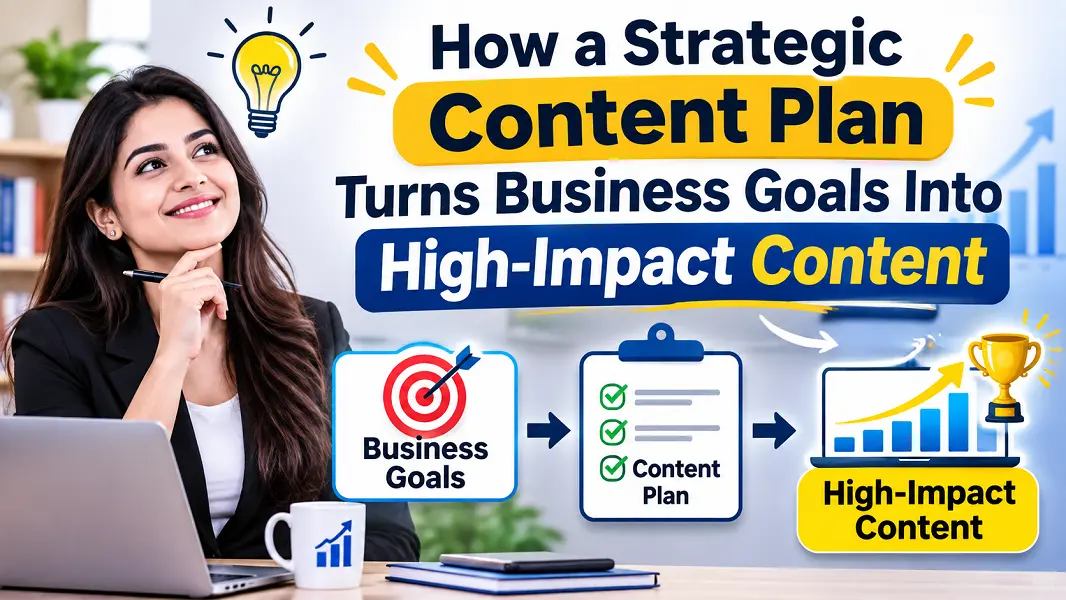
A strategic content plan starts backward from where most teams begin. Instead of asking what to write about, it starts by asking what the business actually needs content to accomplish.
- Define the specific business goal: more qualified leads, shorter sales cycles, stronger brand trust.
- Identify the audience and stage of the buying journey that goal depends on.
- Map content topics directly to that audience’s real questions and concerns.
- Prioritize topics by both business impact and realistic search opportunity.
Quick summary: A strategic content plan starts from business goals first, then works backward to specific topics, rather than starting with topic ideas alone.
Mapping Content to the Buyer’s Journey
Not every piece of content should target the same reader. Someone just discovering a problem needs something different than someone comparing vendors before a decision.
A Simple Way to Think About This
- Early-stage content should educate on the problem, not pitch a solution yet.
- Mid-stage content should compare approaches and build credibility.
- Late-stage content should address specific objections and support the final decision.
Skipping this mapping is one of the most common reasons content gets read but doesn’t convert.
Prioritization Is Where Most Plans Fall Apart
To be completely fair, having a long list of good topic ideas isn’t the same as having a plan. Prioritization is what actually makes a content plan strategic rather than just aspirational.
Topics should get ranked by a combination of business impact and realistic opportunity, not just personal interest or what a competitor recently published.
Note: Prioritizing topics by business impact and search opportunity together prevents the plan from turning into an unfocused wish list.
Building In Measurement From the Start
A plan without measurement just becomes another list nobody revisits. Before publishing, it’s worth deciding how success will actually get evaluated for each piece.
That might mean tracking qualified leads generated, search rankings for target terms, or how a piece gets used in the sales process. Different goals call for different metrics, and deciding this upfront avoids vague, unmeasurable success later.
Believe it or not, this step gets skipped constantly, which is exactly why so many teams can’t explain what their content is actually doing.
Keeping the Plan Flexible, Not Fixed
This isn’t a rigid document set once a year and forgotten. Search behavior shifts, business priorities change, and new questions emerge from actual customer conversations.
Reviewing and adjusting the plan regularly, rather than treating it as fixed, keeps content aligned with what the business actually needs right now, not what it needed six months ago.
Getting Started Without Overcomplicating It
Speaking of which, this doesn’t need to be an elaborate document to be effective. A practical starting point:
- Write down the single most important business goal content should support right now.
- List the real questions your best customers ask before buying.
- Map those questions loosely to stages of the buyer’s journey.
- Pick a handful of topics that clearly connect to the goal, not just interesting ideas.
Take my word for it: a simple plan tied to real goals outperforms an elaborate one built around guesswork.
FAQs
- How is a strategic content plan different from a content calendar?
A content calendar schedules what gets published and when. The strategic version defines why specific topics matter and how they connect to business goals before scheduling anything.
- How often should a strategic content plan be reviewed?
Quarterly reviews work well for most businesses, though significant shifts in business priorities or search behavior may call for adjustments sooner than a scheduled review.
- Does every piece of content need to tie directly to a business goal?
Ideally, yes, even loosely. Content with no clear connection to a goal is harder to justify, measure, or improve, and often signals a gap in the underlying plan.
- Can a small business build one without outside help?
Yes, though it requires discipline to prioritize goals over interesting ideas. Many small businesses start alone and bring in outside expertise once the plan needs to scale.