
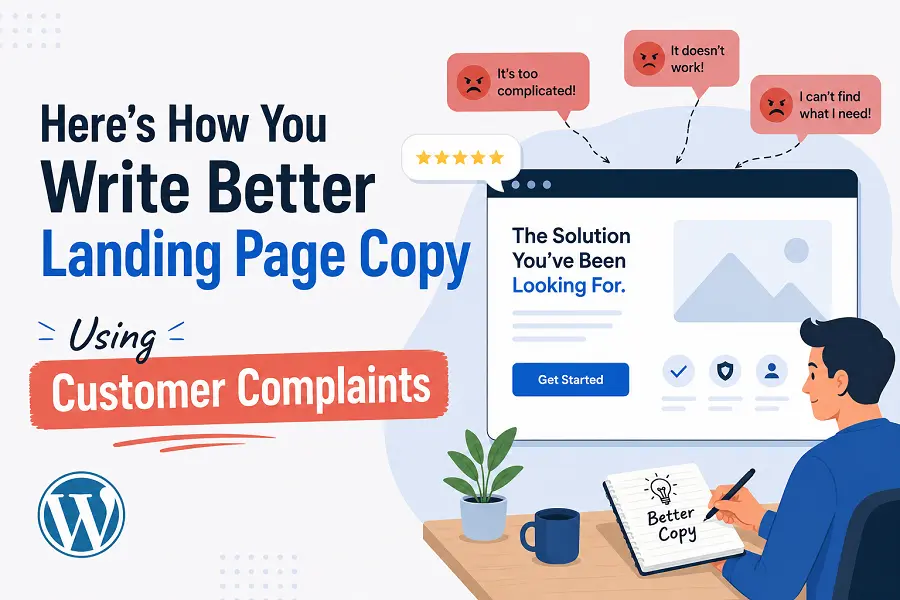
Many landing pages do not get good results. This happens because the text only talks about the product itself. Business owners love to list every single feature of their service. They explain how the tool works and talk about the history of their company. They think that if they give enough details, people will want to buy right away. But website visitors do not just want facts. They arrive with deep doubts, fears, and worries. They want to know if this specific offer will fix their exact problem.
To build a high-converting page, you must change your strategy. You need to treat your copy as a simple tool to remove doubts. Every part of your page must find and answer a specific customer fear. This means you stop focusing only on why your product is amazing. Instead, you focus on what stops a person from buying. This simple shift fixes your messaging. It lines up your text with how people actually make choices.
Move from Product Features to Customer Fears
Friction happens when a visitor reads something that makes them pause. It can also happen when they cannot find the answers they need. Most sales pages focus on product benefits. But benefits do not matter if the reader does not trust you yet. If a visitor thinks your tool is unreliable, a list of cool features will not save the sale. They will just leave your site.
When teams study feedback on digital platforms like Paperwriter to optimize landing page performance, they see that clarity matters more than flashy words. Readers want quick answers to simple questions. They want to know about delivery times, quality rules, and data privacy. If your page hides these basic details, the visitor will close the tab.
To change your writing style, look at your features in a new way. A feature is simply a tool to prove that a customer’s fear is wrong. For example, a support team is not just an extra operational feature. It is direct proof that counters the fear of getting stuck with an error.
Simple Ways to Find Real Customer Complaints
You cannot guess what your target audience worries about. Guessing leads to answering the wrong questions. You might miss the real walls that keep people from buying from you. To get real data, you must listen to your actual market: read online reviews, send out surveys, and listen to complaints.
Third-party review sites are free info customers give about the similar products. There’s no losing for you here – just raw data about how your competitors failed. Surveys are a bit more work, but they can cover the exact issues YOUR customers are having. Complaints are the last straw and it’s better for the problem not to come to this state, but it’s a reality business owners need to live with and troubleshoot.
Put all of your findings into a basic spreadsheet and group them, categorize, find patterns. You’ll be able to answer real worries using the same plain words your audience uses.
Where to Put Your Answers on the Page
Every landing page will deal with different doubts, but a visitor’s worries actually change the further they scroll down your page. At the very top, people just want to know if your offer even matches their exact situation. If your main headline is too vague, they will just leave before they read anything else.
Once they see it’s clear it’s for them, the question is whether your tool actually works, which is why the middle section needs real data and setup times instead of boring marketing hype. You need to end with customer reviews and safety badges right next to the signup form since anxiety hits its highest point at the end when it is time to type in an email or card number. Handling trust issues directly in your web copy shrinks the gap between poor sales and high conversion rates right when people are about to click.
How to Write Direct Answers to Customer Doubts
Answering a doubt does not mean you point out your flaws before the customer sees it. Writing clear statements preemptive of the complaint can stop it. Put these answers near buttons, pricing charts, and signup forms, highlight them, put them in a box. Do everything you can to make them visible. A customer that had knowledge from the start will be much more appreciative.
Every business will have different pain points, but there are certain issues most problems stand out from and you can easily alleviate in a user’s mind?
- Prices are always the point of contention. No customer would really know how your price is made. If there’s a chance people might think your price is too high, put a clear value breakdown or a refund guarantee next to the pricing tier. State exactly what they get for their cash.
- If users worry the tool will not work for them, offer a free trial and state a clear refund policy. You should also be clear about what issues your product can help them with. show a basic step-by-step breakdown of how the setup works. Empty promises are a sure way of getting disgruntled customers.
- Security in the digital age is always on everybody’s minds. Since data has been a valuable resource companies want, you must state clearly what kind of information you collect and it will be used for. When you ask for an email or card number, add a brief note. Confirm that they’re safe and nothing will ever be shared without permission.
Clear notes on your landing page give quick peace of mind. They turn scary moments into trust. Testing shows that using plain text to solve reader doubts creates a better user experience that brings more sales. Also, building your pages to keep the user focused on one single goal ensures that extra distractions do not get in the way of solving their main worries.
Test Your Copy to Make It Better
Writing copy based on complaints is not a one-time job. Market trends change, competitors update their prices, and new doubts pop up over time. Because of this, you must run simple split tests on your pages. This step checks if your new text is truly fixing customer friction.
Test two different headlines to see which one answers doubts better. For example, test a headline about clear prices against a headline about fast setup speeds. Watch your bounce rates and form signups to see which page wins. When you improve your copy based on real user actions, you keep your site ready to answer the exact worries of your market. This helps you grow your main brand business and build deep real trust.