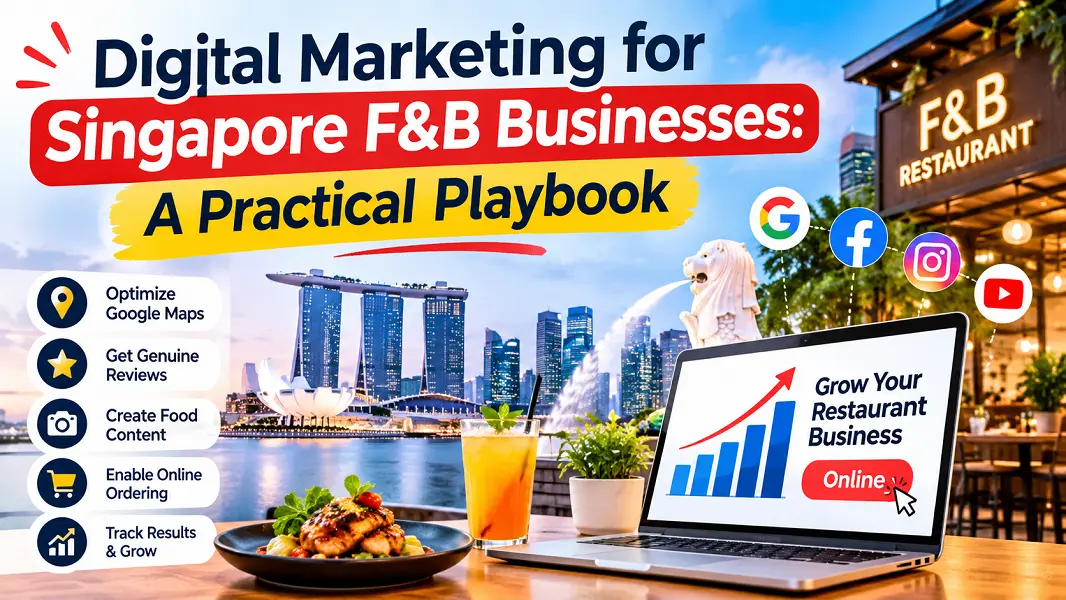
Singapore diners may discover a restaurant through Google Maps, a food video, a friend’s recommendation or a delivery app. The challenge is turning that interest into reservations, visits and profitable orders.
The short answer: Effective digital marketing for Singapore F&B businesses connects accurate local listings, genuine reviews, useful food content and convenient ordering. Measure reservations, orders and profit not views or follower counts alone.
Why Should Restaurants Prioritise Google Maps?
A Google Business Profile helps customers check a restaurant’s location, opening hours, menu and dining options. In 2026, Google also introduced conversational Ask Maps features for questions about places and dining; availability varies by market.
This makes clear, current restaurant information increasingly important, although no listing update guarantees an AI recommendation or ranking.
Begin with a practical audit:
- Verify your address, phone number and regular and public-holiday hours.
- Add current menu items or a working menu link, with clear dish names and prices.
- Check supported attributes, such as dine-in, takeaway and accessibility.
- Upload recognisable photos of signature dishes, the entrance and seating.
Google’s restaurant Business Profile guidance explains available menu, ordering and performance features. Update information whenever your operations change.
How Should Restaurants Use Customer Reviews?
Reviews help potential diners assess food quality, portion sizes, service and atmosphere. Invite genuine feedback, respond professionally and identify recurring complaints that deserve operational attention.
Avoid paying for reviews or offering rewards in exchange for positive ratings. Google’s Maps policy prohibits fake or incentivised engagement.
A pattern of complaints about long waits may reveal a service issue that better advertising cannot solve.
Xiaohongshu or TikTok: Which Content Is More Useful?
Xiaohongshu may suit outlets whose customers already browse Chinese-language dining recommendations. Show actual dishes, approximate spend, location and what a visit feels like. Disclose commercial collaborations appropriately.
TikTok can showcase preparation, staff stories and short demonstrations. A chef explaining a signature dish or a video comparing lunch-set portions may answer questions diners already have.
Both platforms can support discovery; neither guarantees bookings. Include practical details and test whichever channel your intended customers use rather than posting everywhere.
For example, a neighbourhood zi char outlet promoting a weekday set meal could show preparation in a short video, then state its price, serving hours, location and reservation options. The content should make a visit easier to plan, not simply generate views.
Are Delivery Apps Profitable for Your Restaurant?
Delivery platforms can introduce new customers, but commissions, promotions and packaging affect what an order earns.
Hypothetical S$30 delivery order:
| Item | Amount |
| Customer payment | S$30 |
| Food and ingredients | −S$10 |
| Platform charges | −S$9 |
| Packaging | −S$2 |
| Contribution before other expenses | S$9 |
The S$9 is not net profit: labour, rent, utilities, taxes and other expenses still matter. These figures are illustrative, not standard platform rates.
Compare delivery with dine-in, takeaway and any direct-ordering option you can operate reliably. Make ordering links and WhatsApp contact routes easy to use. Send promotional messages only when appropriate consent and platform requirements are met.
What Can an F&B Business Do in Four Weeks?
- Week 1 — Fix discovery: Verify Maps details, menus, photos and opening hours.
- Week 2 — Publish evidence: Share two or three useful food posts on one relevant platform.
- Week 3 — Test conversion: Check booking links, enquiry replies, ordering instructions and staff responsibilities.
- Week 4 — Review results: Compare reservations, order contributions, customer feedback and the full marketing cost.
Keep a simple record of which enquiries became reservations or orders. Note tracking gaps rather than presenting estimates as confirmed sales.
For businesses using external support, Advergreen Digital offers Singapore SMEs social media marketing, website improvements and WhatsApp Business Platform solutions. Evaluate whether any proposed service improves a specific gap between discovery and customer action.
Frequently Asked Questions
Does Every Restaurant Need Xiaohongshu and TikTok?
No. Start where your customers look for dining information and where you can maintain accurate content.
Are Google Reviews More Important Than Food Videos?
They serve different purposes. Videos may attract attention, while reviews help people assess an expected experience.
How Can I Measure F&B Marketing Results?
Track bookings, orders, qualified catering enquiries, repeat visits where measurable, and contribution after relevant costs. Match these to each campaign’s objective.
Final Thoughts
The strongest F&B digital marketing strategy in Singapore connects discovery with a trustworthy dining experience and an easy next step. Keep information current, show real food, respond to customers and judge success by sustainable business results.