SEO is one of the most reliable long-term growth channels a business can build. But anyone who has worked on a new site knows the catch: it takes time. Content needs to be indexed, links need to be earned, and rankings can take months to move. In the meantime, businesses still need traffic, leads, and sales.
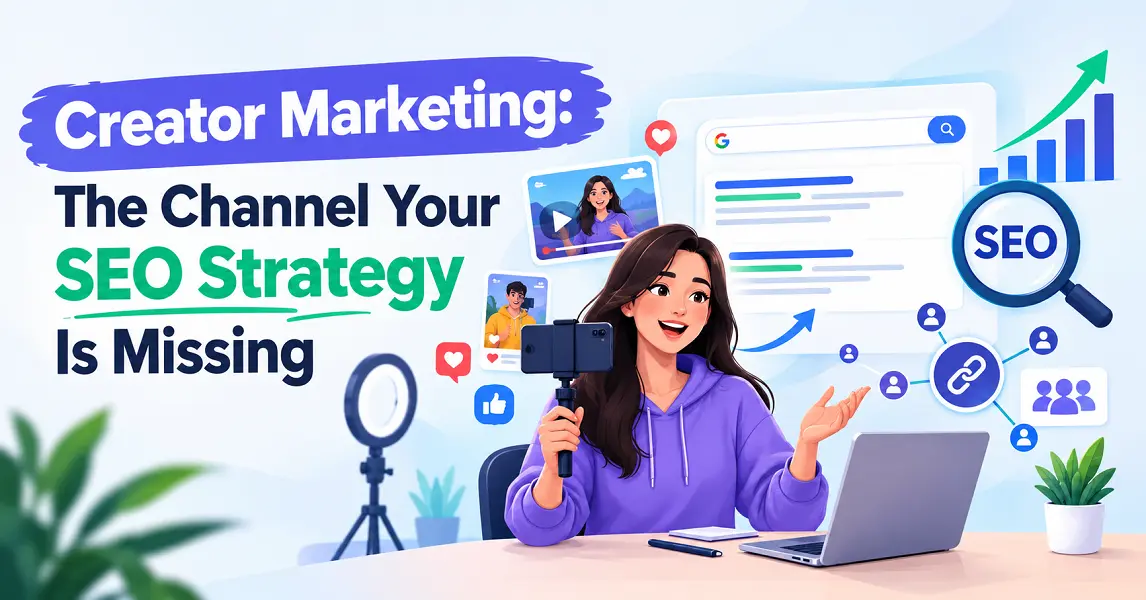
That’s where many marketers turn to paid ads. Increasingly, though, they’re also turning to a channel that sits somewhere between organic and paid: creator marketing that’s priced on performance. This article looks at how it works, why it fits naturally alongside SEO, and what to watch out for.
Why traditional influencer marketing frustrates performance marketers
If you come from an SEO or PPC background, you’re used to measuring everything. You know your click-through rate, your cost per click, and where each visitor came from. Traditional influencer deals often don’t work that way.
Most influencer campaigns are paid with a flat fee. The brand pays upfront, the creator publishes, and results are reported later, often through screenshots. If the post underperforms, the brand has still paid in full. On top of that, agencies and platforms frequently take a large share of the budget, commonly around 30%, before any of it reaches the creator or the audience.
For a marketer who has to justify spend against a cost-per-acquisition target, that’s a hard sell.
How performance-based creator campaigns work
Performance-based creator marketing borrows the pricing models digital marketers already know:
- CPM (cost per thousand views): the brand pays for every 1,000 real views of the creator’s content. Good for awareness.
- CPC (cost per click): the brand pays only when a viewer clicks through to its website, app, or landing page. Good for traffic and acquisition.
- CPA (cost per action): the brand pays for a specific outcome such as a sign-up or purchase.
The key difference from a flat fee is that budget follows results. A campaign that performs can be scaled, and one that doesn’t costs very little. Results also become directly comparable with your Google Ads, Meta Ads, and organic numbers.
Where creator marketing and SEO work together
Creator campaigns aren’t a replacement for SEO, but they support it in several useful ways.
Faster traffic while SEO matures. A new page might take months to rank. A creator campaign can send qualified visitors to the same page this week, giving you data on engagement and conversions while you wait.
Brand search demand. When people discover a brand through a creator they trust, many of them search for it by name later. Growth in branded searches is a healthy signal and often leads to stronger click-through rates on your organic listings.
Content ideas from real audiences. Comments and questions on creator videos show how real people talk about a problem. Those phrases make excellent long-tail keyword ideas and FAQ sections.
Natural mentions. When a campaign gets attention, bloggers, newsletters, and communities sometimes mention the brand on their own. You can’t buy that, but good campaigns make it more likely.
Why smaller creators often perform better
With flat fees, brands chase follower counts because they’re paying for a promise of reach. With performance pricing, audience quality matters more than size.
Micro and nano creators with a few thousand engaged followers in a specific niche (personal finance, no-code tools, gaming, fitness, local businesses) often drive more relevant clicks than broad accounts with much bigger audiences. For niche SaaS products, apps, and local services, those clicks are frequently the ones that convert.
It also helps creators. Many smaller channels don’t yet qualify for platform monetization programs, and performance campaigns give them a way to earn from the traffic they already generate.
A checklist before you launch
- Validated results. Make sure views and clicks are filtered for bots, repeated clicks, and fake traffic. Performance pricing only works if the numbers are real.
- UTM tracking. Tag every creator link with UTM parameters so the traffic shows up clearly in Google Analytics and can be compared with your other channels.
- A focused landing page. Send traffic to a page built for that audience, not just your homepage. This is also a chance to test pages you want to rank later.
- A clear brief. Give creators the key message, required mentions, and tone, then let them speak in their own voice.
- Platform fees. A few percentage points of commission make a real difference to campaign returns, so compare before you commit.
- A capped test. Start with a short campaign and a fixed budget to learn your real CPC and CPA before scaling.
An example: Wayo Ads
Wayo Ads is built around this model. Brands launch campaigns with content creators and pay only for validated views and clicks. The platform takes about a 5% fee, compared with roughly 30% at many alternatives, so creators keep around 95% of what they earn. If you want to see how a performance-based creator campaign could fit next to your SEO work, you can learn more at Wayo Ads.
Final thoughts
SEO builds the foundation, but it rarely delivers results on day one. Performance-based creator marketing gives digital marketers a measurable, budget-controlled way to drive traffic now, build brand demand, and gather audience insights that feed straight back into their content strategy. Treated like any other channel, with tracking, testing, and clear targets, it can become one of the most efficient parts of an integrated marketing plan.