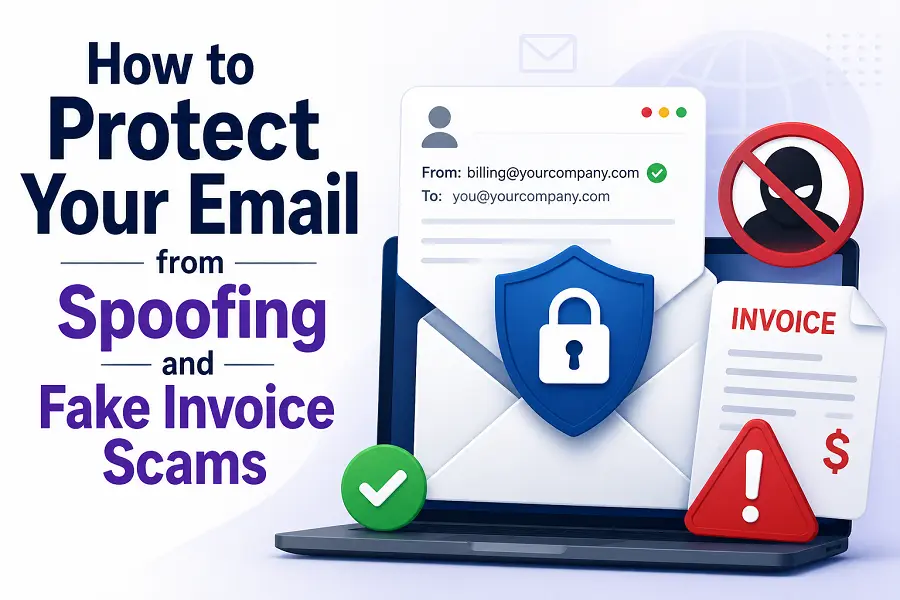
A single, split-second click during a frantic morning is all a scammer needs to drain a company account through a fake invoice. Fraudsters exploit those brief moments of distraction to insert deceptive billing into your workflow. These cyber attacks succeed because they look exactly like a routine request from a partner or your internal finance team. Securing your conversations begins by selecting reliable business email providers in India that implement strict verification rules to authenticate every incoming message. Transitioning from basic accounts facilitates the creation of specific barriers that intercept potential threats before they ever reach the inbox.
Modern digital tools make it effortless for small teams to buy professional email services that come with enterprise-grade filtering. Relying on personal or outdated accounts is risky because it leaves a door open for spoofing—where a malicious actor impersonates your domain to trick clients into paying the wrong person. A verified address establishes a clear path of trust, ensuring your vendors recognize they are communicating with the authentic entity. By establishing this formal channel, the business significantly decreases the risk of such malicious emails triggering a major financial setback.
What is Email Spoofing?
Think of email spoofing as a digital mask. A hacker changes the “From” line of an email to look like it came from a source you trust. This process replicates the strategy of someone mailing a physical letter and scribbling a fake return address on the envelope to invite a glance. By pretending to be a colleague or a well-known brand, they hope you’ll skip your usual caution. The FBI reports that these identity-based scams generate billions in losses annually, demonstrating that deception remains a primary tool for modern thieves.
How Does Email Spoofing Work?
The problem exists because the standard system for sending mail, known as SMTP, was never built to verify who is actually behind an address. It’s a legacy protocol that lets a sender manually fill in the “From” and “Reply-To” fields. Criminals use basic software to overwrite these spots with your domain or a trusted partner’s name.
Often, they will use a “look-alike” domain, such as replacing the letter “m” with “rn” (For instance, https://www.google.com/search?q=exarnple.com instead of example.com). This trick relies on a quick visual glance. Once you believe the sender is legitimate, you are much more likely to follow their instructions, whether that involves clicking a link or updating bank details for an invoice.
Email Spoofing Protections
Stopping these attempts requires a mix of technical settings and refined operational protocols. Most professional mail systems now use three main layers to prove a sender is who they claim to be:
- Server Authorization (SPF): This functions as an authorized guest list, informing the global network which servers possess the clearance to transmit mail on behalf of the business.
- Digital Signatures (DKIM): This attaches a unique code to your mail, proving the message wasn’t altered after you sent it.
- Instructional Policy (DMARC): This instructs other mail providers to execute specific actions when a message fails verification—frequently directing them to block the delivery.
Watching for Red Flags
Even the best filters aren’t perfect. Teaching your team to spot odd details is your best backup. Scammers almost always create a fake sense of urgency. If an invoice arrives out of the blue, demanding payment in an hour to “keep your account active,” pick up the phone. Contact the vendor using a number you already have on file, not the one in the suspicious email.
Always check the “Reply-To” address. A fraudulent message might appear legitimate in an inbox, but selecting “Reply” often reveals a completely different, unrelated address. Catching these small errors is how you stop a fraud attempt in its tracks. Having a set process for any change in payment details ensures that a single mistake doesn’t result in a loss.
Advanced Detection Tools
Advanced threat protection platforms analyze the behavior of incoming mail to detect anomalies. They scan for suspicious links or attachments that might contain malware designed to capture your screen or record your typing. Using a service that opens these files in a safe, isolated “sandbox” adds a heavy layer of defense. This way, a bad file can’t jump from your email into your private network or local files.
MilesWeb serves as the backbone for this security level by including professional email accounts and daily backups within its hosting packages. A central system makes it much easier to track any suspicious login attempts. If things ever go wrong, having those daily archives means you can pull your data back quickly without losing your history or customer trust.
Strengthening Financial Protocols
A simple dual-authorization protocol for wire transfers can end a scam immediately. Dual authorization is required before finalizing any significant invoice payment. This forced pause gives someone with fresh eyes a chance to identify a potential spoof that the first person missed. It turns a weak spot into a resilient, repeatable protocol.
Utilizing digital signatures on PDF invoices benefits the clients as well. When companies sign documents, they provide customers with verified digital credentials to confirm that the file originated from the corporate office. This extra step builds your reputation as a reliable partner and keeps your revenue where it belongs.
Concluding Insights
Creating a secure communication system is more than just avoiding a fraudulent link; it is about building a space where your business can run without constant interruptions. When you pair automated security validations with refined operational protocols, you block the paths that scammers use the most.
MilesWeb provides the necessary tools and server environment to keep your mail safe and your data reachable whenever you need it. Adopting these security standards transitions the technical framework into a reliable foundation for sustainable business operations.