

On September 24, 2026, Google added web multimodal search reporting to Search Console. The new data covers searches made with an image rather than typed words: Google Lens, Circle to Search on Android, image uploads to Google Search, and Chrome’s right-click “Search this image.” It appears as a new search type filter in the Performance report for Search results and in the report for Generative AI features, it can be exported, and it is rolling out globally. If your site receives traffic from these queries, the numbers will already be there.
This is the first time most site owners can see visual search as a line of its own. Until now, a visitor who pointed a phone camera at a product, a plant or a logo and landed on your page was folded into ordinary web traffic, or lost entirely. The question is what to change once the number is visible.
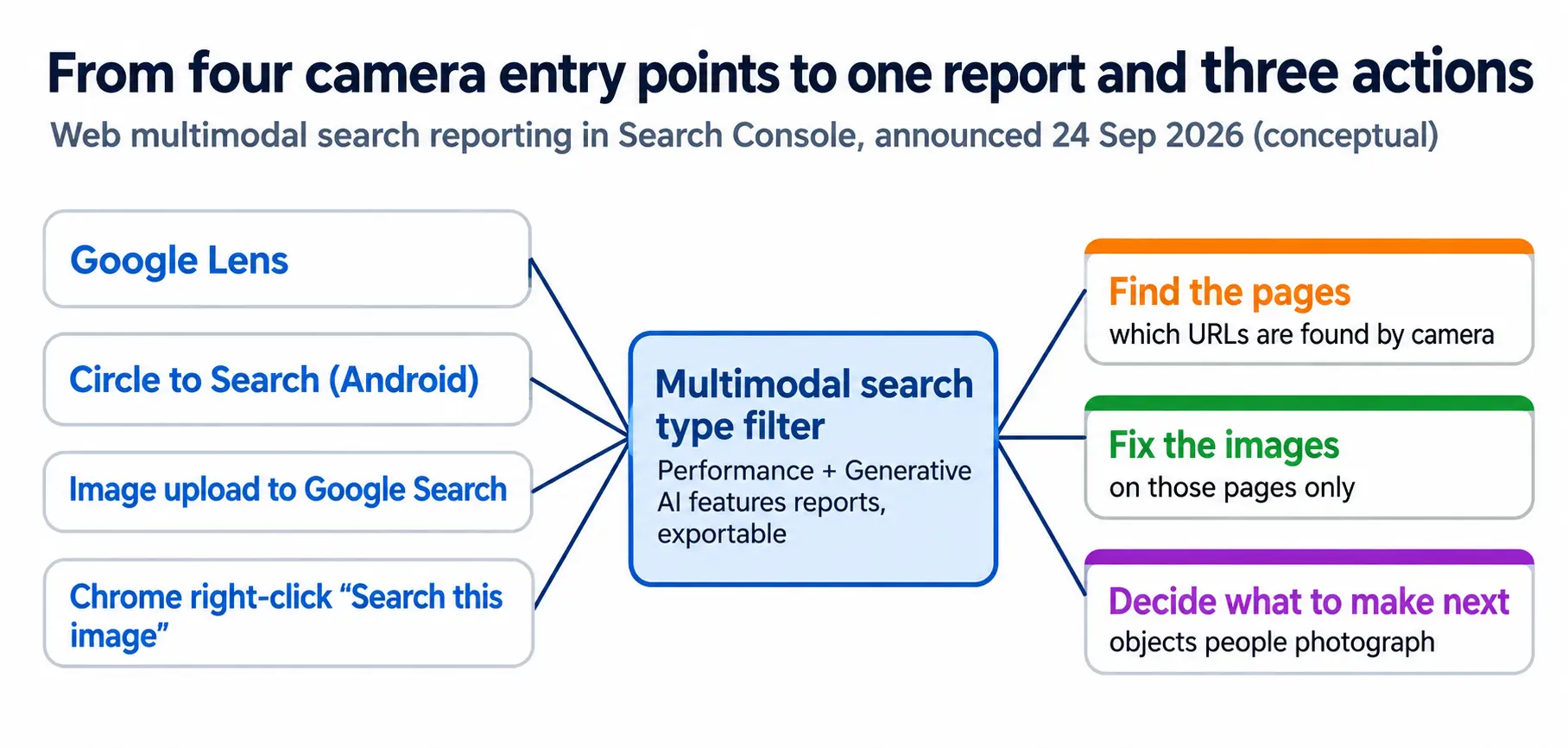
From four camera entry points to one report and three actions — original conceptual diagram based on Google’s 24 Sep 2026 announcement; no performance data.
First, find out which pages are being found by camera
Open the Performance report, apply the multimodal search type filter, and sort pages by impressions. The list is usually a surprise. Product pages and how-to pages with clear photographs tend to appear; long text articles rarely do. Export the page list with impressions, clicks and the countries they come from, and keep it. A single export on the day you first look is the baseline that every later change will be measured against.
Then compare the multimodal list with your ordinary web search list. Pages that rank well for typed queries but never appear for camera searches usually have one of three problems: the images are decorative rather than descriptive, the images are too small or compressed to be matched, or the page’s text does not say what the image shows.
Second, fix the images on the pages that matter
Visual search matches what is in the picture, so the picture has to show the thing plainly. A product photographed alone on a clean background is easier to match than one buried in a lifestyle scene. A real photograph of the object is easier to match than a stock illustration. Each important image needs a file name, alt text and a nearby caption that say in words what it shows, because the page still has to be understood once the match is made.
These are ordinary technical checks, and they belong in the same place as the rest of them. A technical SEO audit that already reviews indexing, speed and structured data should now include an image pass for the pages that the multimodal report lists first: are the images crawlable, are they served at a usable size, do they have descriptive alt text, and does the product schema on the page reference the same image a camera search would match. Fixing images on a page that nobody searches by camera is wasted effort; the report now tells you where the effort pays.
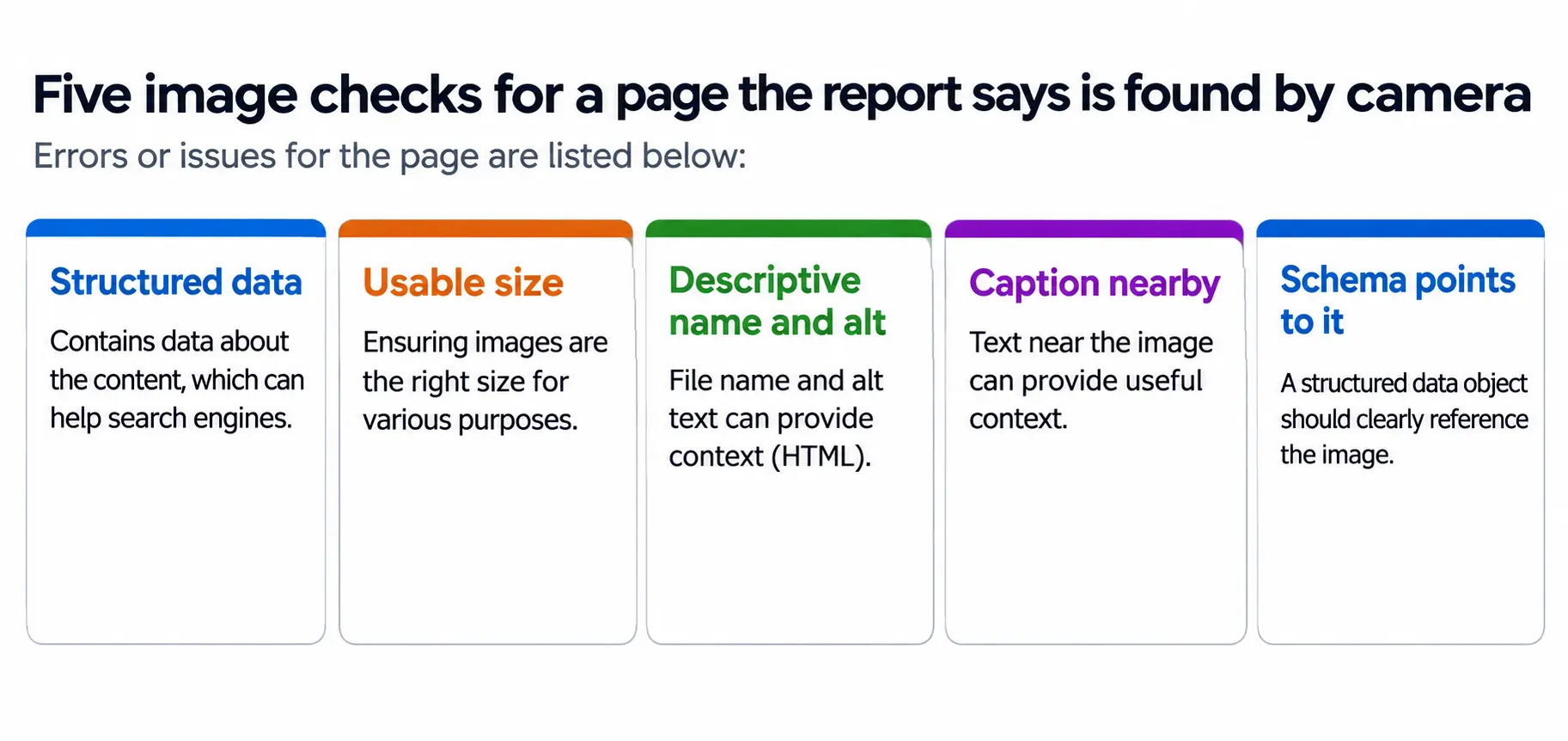
Five image checks for a page the report says is found by camera — original conceptual diagram; no performance data.
Third, decide what to make next
The report is also a research tool. Impressions without clicks on a camera search mean people are seeing your page as a match and choosing something else, often because another result shows the object more clearly or answers the obvious next question, such as price or availability. Pages with growing multimodal impressions are telling you which objects people photograph; those objects deserve their own pages, with their own clear images, if they do not have them yet.
Keep the comparison honest by looking at typed demand alongside it. The free SEOtools keyword and audit utilities can show whether the same object has typed search interest, so you can tell a product that people only recognise by sight from one they also search for by name. The two signals together decide whether a new page needs a strong photograph, strong copy, or both.
Set up the measurement once
Three small habits make the new data useful for more than a week. Annotate September 24, 2026 as the start of the series, so nobody later mistakes the arrival of the report for a change in behaviour. Segment the multimodal filter by country, since camera search adoption differs widely by market and device. And export monthly, because Search Console’s retention window is limited and the trend is the part you will want in a year.
Visual search has been sending visitors for years without a receipt. Now there is one. Read it, fix the pages it names, and let it tell you what to photograph next.