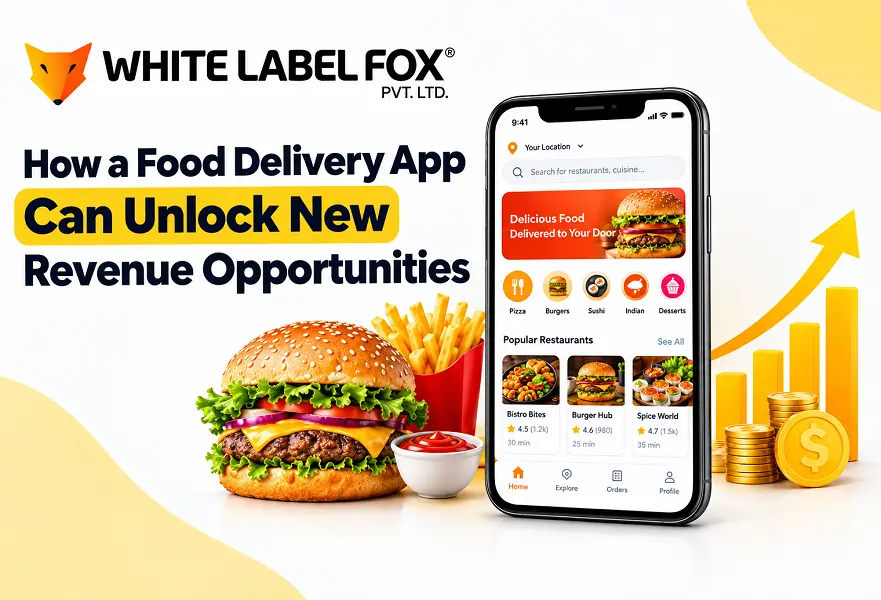
The food delivery market has moved beyond simple online ordering. Customers now expect convenient discovery, fast delivery, flexible payment options, real-time order updates, and personalized experiences. For startups and entrepreneurs, this shift creates an opportunity to build a digital food business that can generate revenue through multiple channels.
A well-planned food delivery app can help businesses connect customers with restaurants, manage orders, expand delivery services, and create additional sources of income. More importantly, businesses are no longer limited to one operating model. They can build a focused food marketplace or gradually expand into grocery, retail, courier, and other on-demand services.
With the right food ordering app development strategy, entrepreneurs can create a scalable platform that supports changing customer expectations while opening new opportunities for business growth.
Why Food Delivery Apps Are Becoming Strong Business Opportunities
Consumer behavior has changed significantly. People increasingly use mobile platforms to discover restaurants, compare menus, place orders, track deliveries, and receive promotional offers from a single application.
This creates value for three major groups:
- Customers get a convenient way to order food.
- Restaurants gain another digital sales channel.
- Entrepreneurs can operate a marketplace connecting both sides.
A modern food delivery app can also collect useful business insights, such as popular cuisines, ordering patterns, customer preferences, peak demand periods, and high-performing locations. These insights can help businesses improve promotions, restaurant partnerships, and customer engagement.
For startups, this makes the food delivery app more than an ordering platform. It can become the foundation for a larger on-demand business.
1. Generate Revenue Through Restaurant Partnerships
Restaurant partnerships are one of the most important opportunities for a food delivery marketplace.
A platform can bring multiple restaurants together and give customers access to different cuisines, menus, offers, and locations. Restaurants benefit from increased visibility and an additional source of digital orders, while the platform earns through its commercial relationship with participating businesses.
Entrepreneurs can build specialized marketplaces around:
- Local restaurants
- Premium dining
- Healthy meals
- Fast food
- Home-cooked food
- Regional cuisines
- Corporate meal services
A focused market can help a new platform establish its identity before expanding into additional categories.
2. Create Additional Revenue With Delivery Services
Delivery itself can become an important business opportunity. Instead of focusing only on connecting customers with restaurants, entrepreneurs can build an ecosystem that supports different delivery requirements.
A on-demand food delivery app development solution can include options for scheduled delivery, express orders, multiple delivery locations, and business deliveries. These capabilities make the platform useful beyond standard restaurant orders.
Once a delivery network is established, businesses can consider expanding into other categories where the same operational model can be used.
This approach can turn a food-focused platform into a broader on-demand service business.
3. Expand Into Grocery Delivery
Food and grocery ordering share many customer behaviors. Users already familiar with ordering meals through an app may also want groceries delivered to their homes.
This creates a natural expansion opportunity.
Businesses can introduce grocery categories such as:
- Fresh produce
- Dairy products
- Packaged foods
- Beverages
- Household essentials
- Personal care products
By combining food ordering with grocery delivery, entrepreneurs can increase the number of occasions when customers use the platform.
Businesses planning this expansion can also explore grocery delivery app development as a separate service or as an additional module within a broader marketplace.
4. Build a Multi-Service Business Model
Another growth opportunity is expanding from food into multiple on-demand services.
A platform can gradually add categories such as grocery delivery, courier services, local shopping, pharmacy delivery, home services, or other location-based services.
This is where the concept of a multi services app like gojek becomes relevant. Instead of asking customers to install separate applications for every service, businesses can bring several everyday services into one digital ecosystem.
For entrepreneurs, this model can create more customer touchpoints and increase the overall usefulness of the platform.
However, expansion should be planned carefully. Adding too many services at launch can make the user experience complicated. Starting with a strong core food service and expanding according to market demand is often a more practical approach.
5. Introduce On-Demand Delivery Categories
The delivery infrastructure created for restaurants can potentially support several other business categories.
For example, entrepreneurs can introduce a delivery anything app model that allows customers or businesses to request the transportation of different eligible products or items.
Possible use cases include:
- Local package delivery
- Document delivery
- Retail purchases
- Business-to-customer deliveries
- Same-day local delivery
- Personal item transportation
This model can help businesses move from a single-purpose food platform toward a broader local delivery marketplace.
The key is to maintain a simple ordering experience while giving customers clear information about delivery status and expected arrival times.
How to Build a Food Delivery Business That Can Scale
Building a scalable food platform requires more than launching an application. Entrepreneurs should first identify their target audience, geographic market, restaurant supply, delivery model, and competitive advantage.
A practical approach is to:
Define the Target Market
Identify whether the platform will serve a city, region, country, niche cuisine segment, corporate customers, or a broader international audience.
Select the Right Business Model
Decide whether the platform will operate as a restaurant marketplace, branded ordering solution, delivery service, or multi-service ecosystem.
Start With Core Features
Prioritize essential ordering, restaurant discovery, delivery tracking, payments, customer communication, and management capabilities.
Plan Future Expansion
Design the business strategy so additional services such as groceries, retail deliveries, and local courier services can be introduced when demand supports expansion.
Focus on Customer Experience
Fast discovery, simple ordering, transparent delivery updates, and reliable customer support can have a direct impact on retention.
Why Food Delivery App Development Matters for Entrepreneurs
The biggest opportunity is not simply launching another food ordering platform. It is creating a digital business that can evolve with customer demand.
An entrepreneur can start with restaurant ordering and later introduce groceries, courier services, corporate orders, or other on-demand categories. This gradual approach allows the business to build an existing customer base before expanding into new markets.
A well-designed Food Delivery App can therefore serve as a starting point for a much larger digital ecosystem.
For startups, the ability to launch under their own brand and customize the platform around a specific business model can also make it easier to establish a unique market position.
Conclusion
A food delivery business can create opportunities far beyond restaurant ordering. From restaurant partnerships and delivery services to grocery expansion, corporate orders, loyalty programs, and multi-service offerings, entrepreneurs can develop several paths for long-term growth.
The key is to begin with a clear market opportunity and build an experience that customers and business partners find valuable. Future services can then be introduced based on actual demand rather than adding unnecessary complexity from the beginning.
Working with an experienced clone app development company can help entrepreneurs turn their business concept into a scalable digital platform while choosing the right features, business model, and expansion strategy.
With a focused Food Delivery App Development plan, startups and established businesses can create a strong foundation for entering the growing on-demand economy.
Frequently Asked Questions
1. What is a Food Delivery App?
A Food Delivery App is a digital platform that allows customers to discover restaurants, browse menus, place orders, make payments, and track deliveries. Depending on the business model, it can also connect restaurants with delivery partners and platform administrators.
2. How can a food delivery app generate revenue?
A food delivery platform can explore multiple revenue channels, including restaurant partnerships, delivery services, promotional placements, subscriptions, corporate orders, grocery delivery, and other on-demand services.
3. Can a food delivery platform expand into grocery delivery?
Yes. Grocery delivery is a natural expansion opportunity because customers already use mobile platforms for convenient home delivery. Businesses can add grocery categories after establishing their core food delivery operations.
4. Can entrepreneurs launch a multi-service delivery platform?
Yes. Entrepreneurs can start with food delivery and gradually add services such as groceries, courier delivery, retail delivery, or other local services. This approach can help create a broader on-demand ecosystem.
5. What should businesses consider before starting Food Delivery App Development?
Businesses should evaluate their target market, customer requirements, restaurant partnerships, delivery model, competitive landscape, core features, and future expansion plans. A clear strategy can help create a platform that is easier to scale and differentiate.