Introduction
Cloud computing has become a fundamental part of modern IT infrastructure. Organizations of all sizes increasingly use cloud platforms to host applications, manage data, support remote work, and build scalable digital services. As cloud adoption continues to grow, professionals who can administer and maintain cloud environments are becoming increasingly valuable.
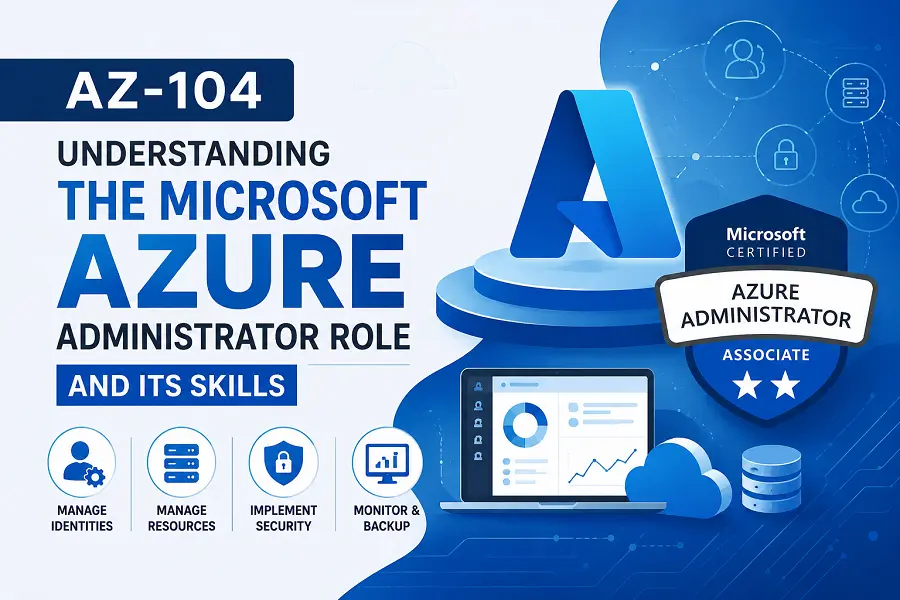
AZ-104 is associated with Microsoft’s Azure Administrator certification path and focuses on practical administration skills within Microsoft Azure. The certification is designed around responsibilities that administrators commonly perform, including managing Azure resources, implementing storage, configuring networking, monitoring environments, and maintaining identity and security.
For IT professionals interested in cloud administration, understanding the skills associated with AZ-104 can provide useful insight into the responsibilities of an Azure administrator.
What Is AZ-104?
AZ-104 is the examination associated with the Microsoft Certified: Azure Administrator Associate certification.
The certification focuses on the practical capabilities required to manage Azure environments.
Azure administrators may be responsible for configuring cloud resources, maintaining infrastructure, managing identities, implementing storage solutions, and monitoring system performance.
The role sits at the intersection of traditional IT administration and cloud computing.
Why Azure Administration Matters
Cloud platforms have changed the way organizations deploy infrastructure.
Instead of purchasing and maintaining every physical server internally, businesses can use cloud resources according to their requirements.
However, cloud infrastructure still needs to be managed carefully.
Administrators must understand resource organization, access control, networking, storage, availability, and monitoring.
Poorly configured cloud resources can result in security problems, unnecessary costs, or service interruptions.
This makes effective cloud administration an important professional skill.
Managing Azure Resources
One of the fundamental areas associated with AZ-104 is Azure resource management.
Azure provides numerous services and resources that organizations can configure according to their requirements.
Administrators need to understand how resources are organized and how access can be controlled.
Resource groups are an important organizational concept within Azure.
They allow related resources to be managed together, making it easier to organize infrastructure and apply appropriate permissions.
Administrators also need to understand subscriptions and management structures within Azure.
Azure Virtual Machines
Virtual machines remain an important component of many cloud environments.
Azure provides virtual machine services that allow organizations to run operating systems and applications without maintaining physical servers.
An administrator may need to select appropriate virtual machine configurations, manage disks, configure networking, and monitor performance.
Understanding how virtual machines work is therefore an important part of cloud administration.
Administrators also need to consider factors such as availability, performance, and cost when selecting configurations.
Azure Storage
Cloud storage is another major area for Azure administrators.
Azure provides different storage services designed for different types of data and workloads.
Administrators need to understand storage accounts, data access, redundancy options, and security controls.
Different workloads may require different storage characteristics.
For example, frequently accessed application data may have different requirements from long-term archival information.
Understanding these distinctions allows administrators to select suitable storage configurations.
Identity and Access Management
Security is central to cloud administration.
Azure administrators work with identity and access management capabilities to control who can access resources and what actions users are allowed to perform.
Microsoft Entra ID plays an important role in Azure identity management.
Administrators may manage users, groups, authentication settings, and access permissions.
Role-based access control can also help organizations follow the principle of least privilege.
Instead of giving users unrestricted access, permissions can be assigned according to their responsibilities.
Azure Networking
Networking is another essential skill for Azure administrators.
Cloud resources need to communicate with one another and, in many cases, with systems located outside the cloud environment.
Administrators may work with virtual networks, subnets, network security groups, routing, DNS, and other networking services.
Understanding how these components interact helps administrators create secure and reliable environments.
Networking knowledge is especially important when troubleshooting connectivity problems.
Network Security
Security controls help protect cloud resources from unauthorized access.
Azure administrators can use network security groups and other security mechanisms to regulate traffic.
Rules can be configured to permit or deny specific types of network communication.
Administrators must understand how security rules affect applications and infrastructure.
Overly restrictive configurations can prevent legitimate traffic, while overly permissive rules can increase security risks.
Monitoring Azure Environments
Cloud infrastructure requires continuous monitoring.
Administrators need to know whether resources are operating correctly and whether performance problems are developing.
Azure provides monitoring capabilities that can help administrators examine resource health, performance metrics, logs, and alerts.
Monitoring can also support troubleshooting.
For example, if an application becomes slow, administrators can investigate resource utilization and related metrics to identify potential causes.
Azure Backup and Recovery
Data protection is another important administrative responsibility.
Organizations need strategies for recovering from accidental deletion, hardware failures, configuration mistakes, or other incidents.
Azure provides services that can support backup and recovery requirements.
Administrators need to understand what should be protected, how backups should be configured, and how recovery processes work.
A backup strategy is only useful when the organization can successfully restore required data.
Automation and Efficiency
Cloud administration can involve repetitive tasks.
Automation can reduce manual effort and improve consistency.
Azure administrators may use tools such as Azure PowerShell, Azure CLI, templates, and other automation technologies.
Automation can help organizations deploy resources consistently and reduce the likelihood of manual configuration errors.
It can also make it easier to manage large environments.
Azure Cost Management
Cloud resources have financial implications.
Unlike traditional infrastructure, where hardware may be purchased upfront, cloud services often generate ongoing usage-based costs.
Administrators need to understand how resource configurations can affect spending.
Cost management tools can help organizations monitor usage and identify unnecessary expenses.
For example, unused virtual machines or oversized resources may increase costs without providing additional business value.
Practical Experience With Azure
Reading about cloud administration is useful, but practical experience can provide a deeper understanding.
Learners can experiment with Azure services in controlled environments to understand how resources behave.
Creating a virtual network, deploying a virtual machine, configuring storage, managing permissions, and setting up monitoring can demonstrate how different services interact.
Practical exercises can also make troubleshooting concepts easier to understand.
AZ-104 and Career Opportunities
Skills associated with AZ-104 can be relevant to several IT roles.
These may include:
- Azure Administrator
- Cloud Administrator
- Systems Administrator
- Cloud Support Specialist
- Infrastructure Specialist
- Cloud Operations Professional
The exact responsibilities vary between organizations.
Some administrators may focus heavily on infrastructure, while others may work with security, automation, or cloud operations.
AZ-104 and Existing IT Skills
Professionals with traditional IT administration experience may find many concepts familiar.
Knowledge of operating systems, networking, virtualization, security, and troubleshooting can provide a useful foundation.
However, cloud environments introduce different management models.
Administrators need to understand concepts such as resource-based management, cloud identity, scalability, consumption-based pricing, and automation.
The transition from traditional infrastructure to cloud administration therefore requires both existing IT knowledge and new cloud-specific skills.
Keeping Azure Knowledge Current
Cloud platforms evolve continuously.
Azure services, features, interfaces, and best practices can change over time.
Professionals should therefore maintain their knowledge after completing a certification.
Official Microsoft documentation, technical announcements, practical projects, and professional communities can all contribute to ongoing learning.
A certification can establish a foundation, but continuous development is important in the cloud industry.
Common Skills for an Azure Administrator
An effective Azure administrator typically needs a combination of technical and professional abilities.
Important areas include:
- Cloud infrastructure
- Networking
- Identity management
- Storage
- Virtual machines
- Security
- Monitoring
- Backup and recovery
- Automation
- Troubleshooting
- Cost management
Communication and problem-solving skills are also valuable because administrators frequently need to work with developers, security professionals, managers, and end users.
Frequently Asked Questions
What is AZ-104?
AZ-104 is the Microsoft examination associated with the Azure Administrator Associate certification.
What does an Azure administrator do?
An Azure administrator manages cloud resources, networking, storage, identity, monitoring, security, and other infrastructure-related responsibilities.
Is networking important for AZ-104?
Yes. Understanding virtual networks, subnets, security rules, DNS, and connectivity is an important part of Azure administration.
Is practical Azure experience useful?
Yes. Hands-on experience can help professionals understand how Azure services work and how different components interact.
Can AZ-104 help with a cloud career?
The skills associated with AZ-104 can support career development for professionals interested in Azure administration and cloud infrastructure roles.
Conclusion
AZ-104 represents an important area of professional development for IT specialists interested in Microsoft Azure administration. The knowledge associated with the certification covers many of the practical responsibilities involved in operating cloud infrastructure, including resource management, virtual machines, storage, identity, networking, monitoring, backup, security, and cost management.
The most valuable outcome is not simply obtaining a certification. Developing practical cloud administration skills can help professionals understand how modern infrastructure operates and how different Azure services work together.
As organizations continue moving workloads toward cloud platforms, administrators who understand infrastructure management, security, automation, and troubleshooting can play an important role in maintaining reliable digital environments. Professionals interested in Azure can explore additional information here, while continuing to develop their skills through practical projects and current Microsoft resources.